 Blaine Siding
 Why Siding Choice Matters More in Cherry Point
Cherry Point sits on the exposed shoreline stretch of north Whatcom County, between Blaine and Ferndale, where homes take weather straight off the Strait of Georgia with almost nothing to slow it down. That's a different exposure profile than a house tucked into town or shielded by a treeline. Wind-driven rain hits siding at an angle instead of falling straight down, salt-laden air settles on every exterior surface year-round, and the long gray stretch from October through May keeps moisture in contact with your walls for months at a time. Add the moss and algae growth that thrives in that combination of shade, humidity, and mild temperatures, and you've got a cladding environment that punishes anything less than a genuinely weather-resistant material.
We install James Hardie fiber cement siding, and only James Hardie. On a page like this, the point isn't to sell you on siding in general — it's to explain, specifically, what Cherry Point properties need from their exterior cladding and how we approach the job when we're out there.
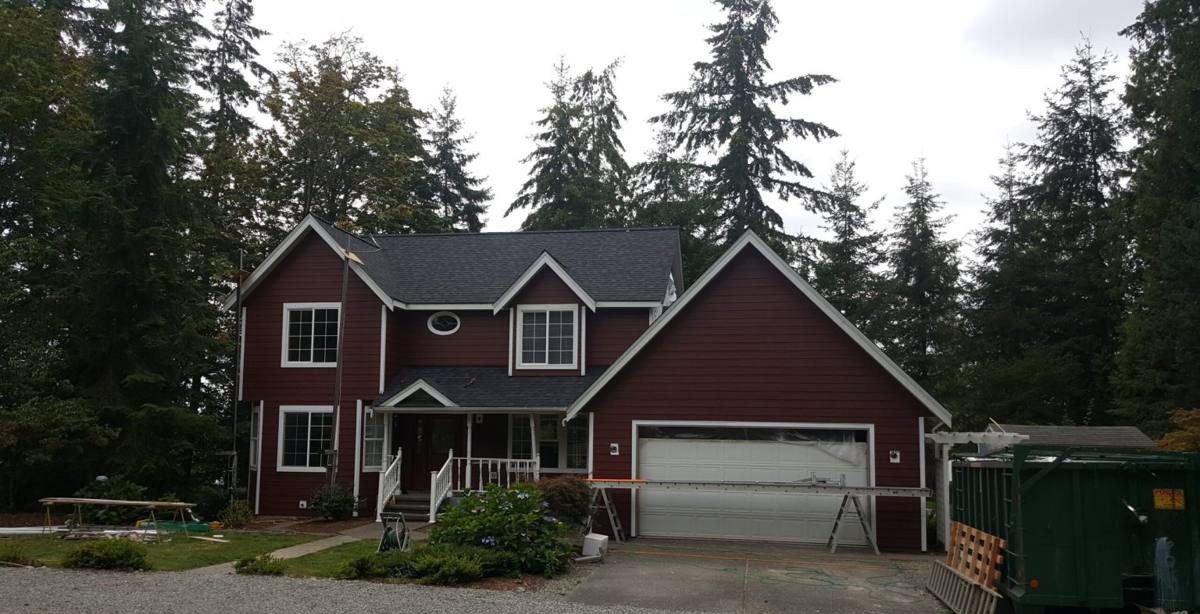
What Salt Air, Rain, and Moss Actually Do to Siding
Salt Air
Airborne salt is corrosive and hygroscopic — it pulls moisture out of the air and holds it against whatever surface it lands on. On siding, that means fasteners, trim, and any exposed edges are under near-constant low-grade moisture exposure, even on days it hasn't rained. Materials that aren't dimensionally stable, or that rely on paint film alone for protection, tend to show that stress first at seams, corners, and butt joints.
Driving Rain
Rain that comes in sideways doesn't just hit the face of the siding — it gets pushed up under laps, into gaps, and behind poorly flashed penetrations. A wall assembly built for straight-down rain in a sheltered subdivision isn't necessarily built for a wall that's catching gusts off open water. Water management at the flashing, the housewrap, and the siding-to-trim transitions matters more here than it does a few miles inland.
Moss and Organic Growth
Whatcom County's wet season gives moss and algae plenty of time to establish on any surface that stays damp — north-facing walls, areas under eaves, and spots shaded by trees or neighboring structures. Growth that's allowed to sit holds moisture against the substrate underneath it, which accelerates whatever degradation process the material is already prone to.
Why Fiber Cement Holds Up Where Other Materials Struggle
Fiber cement is a mix of cement, sand, and cellulose fiber, engineered to be dimensionally stable and non-combustible. It doesn't rot, it doesn't attract insects, and it doesn't expand and contract with moisture the way wood-based products do — which matters directly in a climate that alternates between saturated and dry. James Hardie's HZ5 formulation is engineered specifically for climates like ours, with freeze-thaw cycling and sustained moisture exposure factored into the product design rather than treated as an afterthought.
Just as important: James Hardie's ColorPlus finish is a factory-applied, baked-on finish system, not a field-applied paint job. That matters in a salt-air environment because factory finishes are more consistent and better bonded than anything applied on-site in variable weather — and it means you're not scheduling a repaint every few years just to keep ahead of coastal wear.
What a Correct Install Looks Like on a Cherry Point Property
Fiber cement performs the way it's supposed to only when it's installed to spec. In a marine-exposed location, a few details matter more than they would on a sheltered inland lot:
- Proper clearance and flashing at every window, door, and roofline transition, so wind-driven rain has a drainage path instead of a place to collect.
- Correct fastener pattern and depth — over-driven or under-driven nails are one of the most common causes of early siding failure, and salt air makes fastener quality and placement even less forgiving.
- Proper lap and gap spacing to allow for the material's minor dimensional movement without stressing the joints.
- A drainable water-resistive barrier behind the siding, giving any moisture that does get past the cladding a way out instead of a place to sit against the sheathing.
- Sealed and back-primed cut edges wherever field cuts expose raw material, since an unsealed edge is the fastest point of moisture entry on any fiber cement job.
None of this is unique to us — it's simply what James Hardie's own installation instructions call for. The difference between a siding job that lasts and one that shows problems in five years usually comes down to whether the crew actually follows that spec on every wall, not just the ones that are easy to see.
Our Process for Cherry Point Homes
1. On-Site Assessment
We walk the exterior, check the current siding and any trim, sheathing, or flashing that's already showing wear, and look specifically at exposure — which walls take the worst of the wind and rain, which stay shaded and damp longer, and where moss has already established.
2. Tear-Off and Substrate Check
Old siding comes off wall by wall so we can inspect the sheathing underneath before anything new goes up. In a climate this wet, hidden moisture damage behind old siding isn't rare, and it's far cheaper to catch and repair before the new cladding goes on than after.
3. Water Management Layer
We install or verify a drainable housewrap and correctly flash every penetration, window, and door before the first piece of siding is hung. This step doesn't show once the job is done, but it's the layer that actually keeps water out of your wall assembly over the long run.
4. Fiber Cement Installation
HardiePlank lap siding, or HardiePanel where the design calls for it, installed to James Hardie's fastening and clearance specs, with trim and accessories from the matching Hardie system so the whole assembly performs together instead of as mismatched parts.
5. Final Walkthrough
We check laps, fastener lines, caulking, and trim details before calling the job done, and we go over basic care with you so you know what normal weathering looks like versus something worth a call.
Cost Factors for a Cherry Point Project
Every quote is specific to the house, but the variables that actually move the number are consistent. We won't quote a price without seeing the property, but here's what tends to matter most:
| Factor | Why It Affects the Job |
|---|---|
| Current siding material | Removal complexity and disposal differ significantly between vinyl, wood, and old fiber cement. |
| Sheathing condition | Water-damaged sheathing found during tear-off has to be repaired before new siding goes on. |
| Wall exposure | Walls facing the water or prevailing wind may warrant extra attention to flashing and water management. |
| Trim and architectural detail | Corners, soffits, fascia, and window trim add labor beyond flat wall square footage. |
| Access and site layout | Setbacks, slopes, and vegetation near the house affect staging and scaffolding needs. |
| Hardie product line and color | HZ5 vs. standard lines, plank width, and ColorPlus color selection all factor into material cost. |
Living With Fiber Cement in a Moss Climate
Fiber cement doesn't rot or feed moss the way wood siding can, but nothing is entirely maintenance-free in Whatcom County's climate. A little seasonal attention keeps a Hardie install looking the way it should for decades:
- Rinse siding with a garden hose once or twice a year, focusing on shaded, north-facing walls where moss and algae are most likely to establish.
- Keep gutters clear so overflow isn't running down the wall face during heavy rain.
- Trim back vegetation and tree limbs that keep a wall section shaded and damp longer than the rest of the house.
- Check caulking at trim joints and penetrations every year or two, and have any cracked or missing caulk replaced promptly.
- Watch for chalking or fading — with ColorPlus finishes this is rare, but it's worth knowing what normal weathering looks like versus a sign something needs attention.
Why Hiring a Crew That Already Works This Coastline Matters
A crew that mostly works sheltered inland neighborhoods and occasionally takes a Cherry Point job isn't necessarily thinking about wind-driven rain, salt exposure, or shaded-wall moss the way a crew that works this stretch of coastline regularly does. Knowing which walls on a given lot take the worst exposure, how Whatcom County's permitting and inspection process runs, and what actually goes wrong on marine-exposed installs versus inland ones isn't something you pick up on one job — it's something that shows in how the flashing and fastening get handled on every wall, not just the front one.
We install James Hardie fiber cement exclusively because we've seen what holds up in this climate and what doesn't. That's a narrower scope than a contractor who installs vinyl, LP SmartSide, and fiber cement depending on what a customer wants — but it means every job we do, we're installing the product we believe actually belongs on a Cherry Point home.
Get a Free Estimate
If you're planning a siding project on a Cherry Point property, we're happy to come take a look, walk the exposure with you, and give you a straight assessment of what the house needs. There's no pressure and no obligation — just an honest read on the job and a written estimate you can think over.