 Blaine Siding
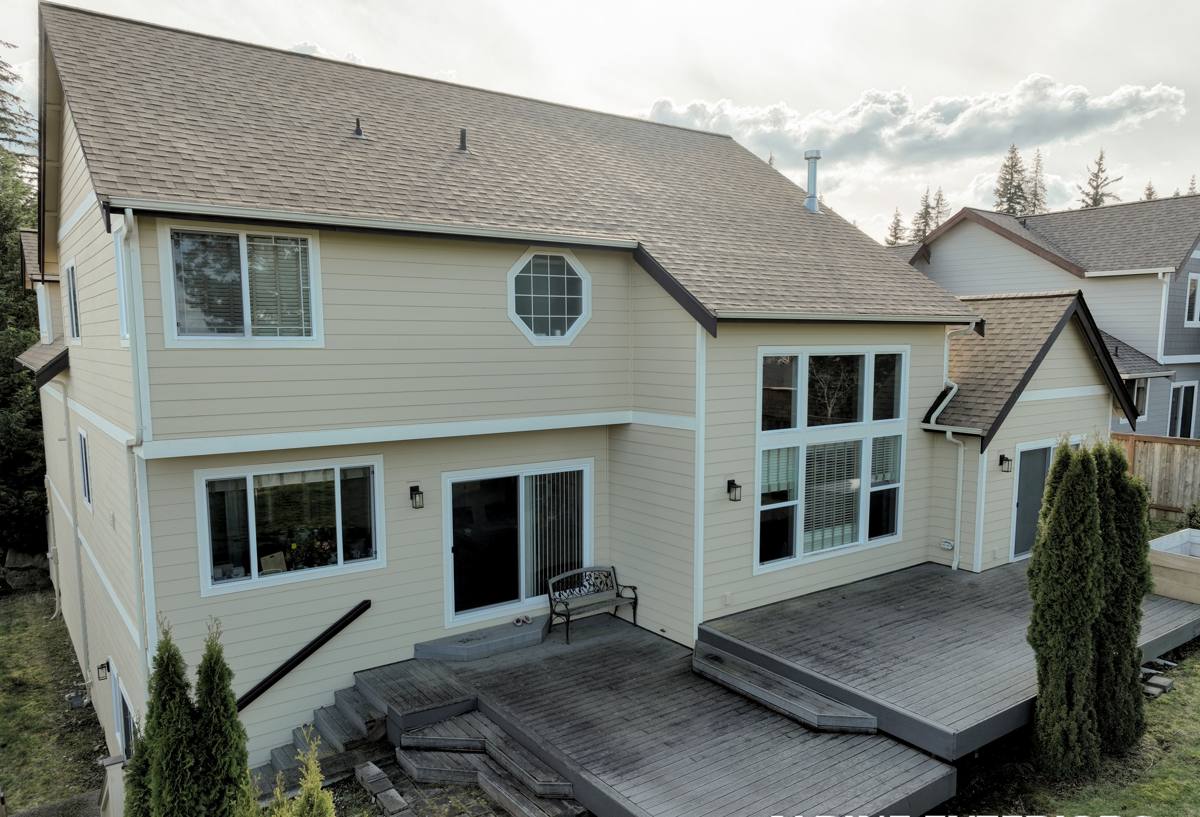
 Decking Built for Cherry Point's Environment
Cherry Point sits close enough to the water that homes here deal with a version of coastal exposure most inland Whatcom County properties never see. Salt-laden air off the Strait, driving rain that comes in sideways during winter storms, and a moss season that can stretch from October through May all put real stress on an outdoor deck. Wood decking in this environment needs constant upkeep — sanding, staining, replacing boards that have cupped or split. Composite decking, installed correctly, is built to shrug off most of that. But "installed correctly" is doing a lot of work in that sentence, and it's the part that separates a deck that looks good for fifteen years from one that starts showing problems in three.
This page covers what composite decking work actually involves for a Cherry Point property, what the climate demands from the materials and the installation, and how we approach the job so it holds up.
Why Cherry Point's Climate Is Harder on Decks Than It Looks
Salt Air and Metal Components
The composite boards themselves are largely inert to salt exposure, but a deck isn't just boards. It's a substructure of joists, beams, and posts, plus every fastener, bracket, and connector holding it together. Salt air accelerates corrosion on standard hardware faster than most homeowners expect, especially anything galvanized rather than stainless or coated for coastal use. A deck that looks fine on the surface can have fasteners quietly corroding underneath for years before anyone notices a problem.
Driving Rain and Moisture Intrusion
Rain that comes in at an angle, which is common with the wind patterns off the water here, gets pushed into gaps and joints that a straight-down rain would never reach. That means ledger board connections, stair stringers, and any point where the deck meets the house siding need careful flashing and sealing — not just at install, but designed to keep working for decades. This is where a lot of deck problems, composite or otherwise, actually originate: not in the decking surface, but in the water management underneath and around it.
Moss, Algae, and Shade
Whatcom County's moss season is long, and Cherry Point's mix of tree cover and persistent moisture gives moss and algae plenty of opportunity to take hold on any north-facing or shaded section of decking. This affects material choice (some composite surfaces resist this better than others), board spacing (airflow underneath matters), and ongoing maintenance expectations, which we'll walk through below.
What a Correct Composite Deck Build Involves
A composite deck is only as good as what's underneath it. Here's what we treat as non-negotiable on every install in this area:
- Engineered substructure: Joist spacing sized to the composite manufacturer's spec (composite typically needs tighter joist spacing than wood — usually 12" or 16" on-center depending on the board and whether it's installed straight or at an angle).
- Coastal-grade fasteners and hardware: Stainless steel or coated fasteners rated for corrosive environments, not standard galvanized hardware that will degrade faster near the water.
- Proper ledger flashing: Where the deck attaches to the house, correct flashing and a drainage gap so water can't wick into the house sheathing or rim joist — this is one of the most common failure points on any deck, coastal or not.
- Ventilation underneath: Enough clearance and airflow below the deck surface to let moisture escape rather than sit and promote rot in the substructure or mold/algae growth on the underside of boards.
- Correct board gapping: Composite expands and contracts with temperature more than wood in some formulations, and gapping has to account for that plus drainage.
- Hidden fastener systems where appropriate: Cleaner look, and fewer surface penetration points where water and salt can work their way into a board over time.
Composite vs. Wood vs. PVC — What Actually Fits This Environment
| Factor | Wood (cedar/pressure-treated) | Composite | PVC / Capped Polymer |
|---|---|---|---|
| Salt air resistance | Moderate — needs regular sealing | Good — most cores resist moisture well | Very good — fully synthetic |
| Moss/algae resistance | Poor without regular treatment | Varies by brand/cap type | Good, smooth surface sheds growth better |
| Maintenance | Annual sanding/staining | Occasional wash, no staining | Occasional wash, no staining |
| Upfront cost | Lowest | Mid-range | Highest |
| Typical lifespan | 10–15 years before major repair/replace | 25–30+ years with proper install | 25–30+ years with proper install |
| Feel/appearance | Natural wood grain, warmer look | Wood-look, wide color/texture range | More uniform, synthetic look |
For most Cherry Point homeowners, composite hits the right balance: it handles the salt air and rain far better than untreated wood, costs less upfront than full PVC, and the maintenance burden is low enough that it actually gets maintained (a deck that's easy to keep clean gets kept clean — one that requires an annual sanding weekend often doesn't).
Our Process for a Cherry Point Composite Deck
1. On-Site Assessment
We look at sun exposure, drainage patterns, proximity to the water, existing structure (if this is a replacement), and how the deck ties into the house. This tells us what board spacing, fastener spec, and ventilation approach the site actually needs — not a generic default.
2. Substructure First
If we're replacing an old deck, we don't just re-skin it. We check the ledger connection, joists, posts, and footings. A new composite surface on a compromised substructure is a short-term fix that creates a bigger problem later — we'll tell you honestly if the frame needs work before we put new decking on it.
3. Flashing and Water Management
Every ledger connection gets proper flashing. Every point where the deck meets a wall, post, or the ground gets checked for how water will move through and away from it, not just how it looks.
4. Installation
Boards go down with manufacturer-spec fastener spacing and gapping, accounting for expansion and drainage. Where a hidden fastener system fits the board and budget, we use it for a cleaner, longer-lasting surface with fewer penetration points.
5. Final Walkthrough
We walk the finished deck with you, point out anything you should know for maintenance, and answer questions before we consider the job done.
Maintenance: What Composite Actually Needs Here
One of the real selling points of composite is how little it asks of you compared to wood — but "low maintenance" isn't "no maintenance," especially with a moss season this long.
- Rinse or sweep the deck surface periodically to keep organic debris (leaves, needles, pollen) from sitting and holding moisture against the boards.
- In shaded or north-facing sections, a simple deck wash once or twice a year keeps moss and algae from getting a foothold — much easier than removing established growth.
- Keep gutters and downspouts near the deck clear so runoff isn't dumping extra water directly onto or under the decking.
- Check underneath the deck occasionally for debris buildup that can block the ventilation the substructure needs.
- Inspect visible fasteners and hardware periodically, especially in the first few years, for any early signs of corrosion.
Why Local Experience with This Area Matters
A deck built to a generic spec sheet without accounting for what Cherry Point's specific exposure does over time is a deck that ages faster than it should. A crew that already works in Blaine and around Whatcom County's coastal edge knows which fastener grades actually hold up here, how far inland the salt exposure meaningfully affects material choices, and where the moss problem tends to concentrate on a given lot orientation. That's the difference between a deck spec'd for "the Pacific Northwest" in general and one spec'd for a property that sits where salt air, driving rain, and a long moss season all overlap.
Questions Worth Asking Before You Hire
Whoever you have quote a composite deck for a Cherry Point property, it's fair to ask:
- What fastener and hardware grade do you use, and is it rated for coastal/salt exposure?
- How do you handle ledger board flashing where the deck meets the house?
- What ventilation clearance do you build in underneath the deck?
- What's the manufacturer's warranty, and does your installation method keep that warranty valid?
- Have you built decks in this specific area before, and can you speak to how they've held up?
A straight answer to each of these tells you a lot about whether you're getting a deck built for the long haul or one built to look good on install day.
Getting Started
If you're weighing a new composite deck or a replacement for an aging wood deck at your Cherry Point property, we're happy to walk the site, talk through material options that fit your budget and the way you'll use the space, and give you a straightforward estimate. No pressure, no hard sell — just a clear look at what the job actually involves. The form below gets you started.