 Blaine Siding
 Why Birch Point Siding Wears Out Faster Than You'd Expect
Birch Point sits out on the water, which means the same wind that makes the view worth owning also drives rain sideways into every seam, joint, and nail hole your siding has. Add in salt-laden air off the Strait and a moss season that can run most of the year in this part of Whatcom County, and you've got three separate forces working against whatever's on your exterior walls at the same time. Most siding products were never engineered with that combination in mind — they were built for a general climate, not a shoreline one.
Salt air is corrosive to exposed metal fasteners and trim, driving rain finds any gap in a weather barrier that isn't installed correctly, and moss and algae hold moisture against the wall assembly for weeks at a stretch during the wet months. None of these show up as a dramatic failure overnight. They show up as slow, cumulative damage — swelling at panel edges, staining that won't wash off, soft spots at the bottom courses — that homeowners often don't notice until it's already behind the siding and into the sheathing.
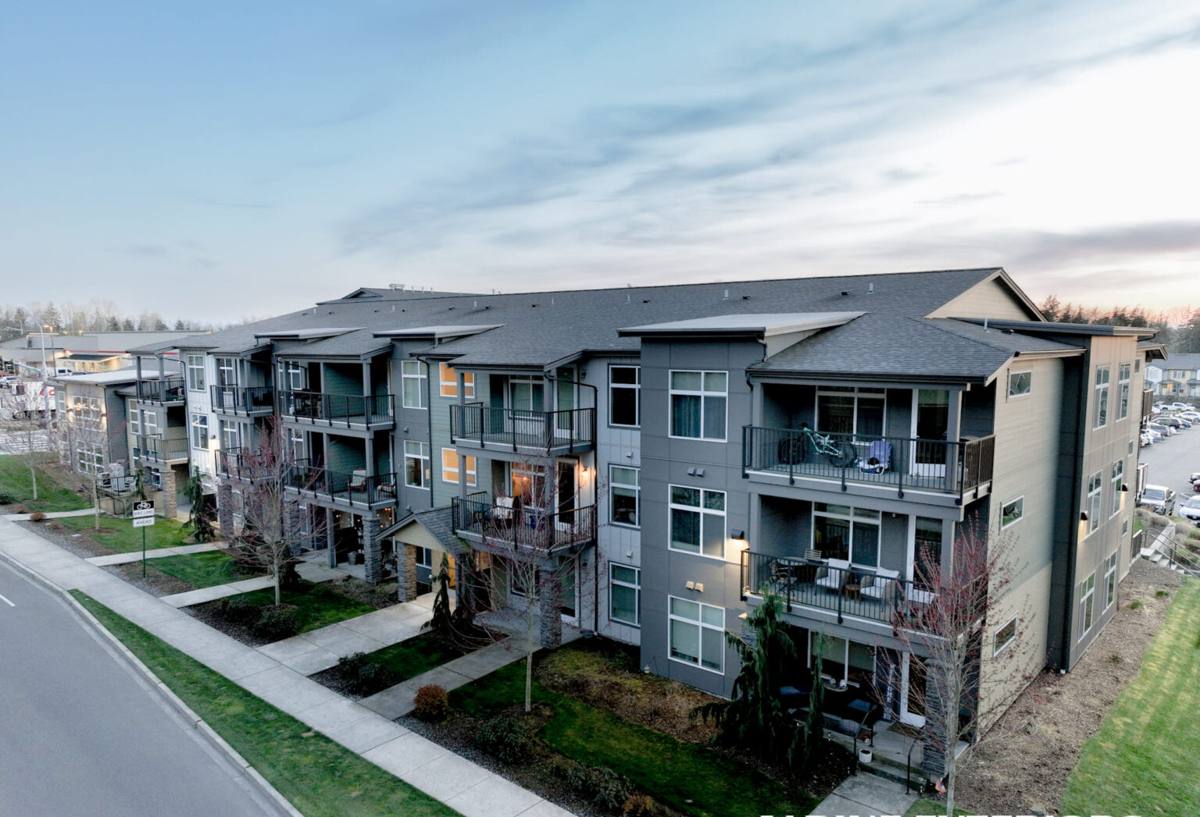
Signs a Birch Point Home Needs Siding Replaced, Not Patched
Patching individual boards or panels makes sense when the damage is isolated and the rest of the wall is sound. On homes this close to the water, damage is rarely isolated — if one section has failed, the same wind and moisture exposure has likely been working on the rest of the wall for the same number of years. Here's what tells us a full replacement is the right call rather than a repair:
- Soft, spongy, or crumbling siding when pressed, especially near the bottom edges and around windows
- Paint or finish that keeps failing within a year or two of repainting, even with quality paint
- Persistent moss, algae, or black streaking that returns within a few months of cleaning
- Visible warping, cupping, or gaps opening up between boards or panels
- Soft or discolored sheathing visible when a section of siding is pulled or has already fallen away
- Siding that's original to a home built more than 20-25 years ago in an exposed, waterfront-adjacent location
If you're only seeing one or two of these in a small area, a targeted repair may still be reasonable. If several are present, or the siding is original and aging, the honest answer is usually that a repair buys you a year or two before you're back to the same conversation.
What a Correct Siding Replacement Job Actually Involves
It Starts Underneath the Siding, Not With It
The siding itself is the least important variable in how long a job lasts on an exposed home like this one. What matters more is what's behind it: a properly lapped weather-resistant barrier, correctly integrated flashing at every window, door, and roof intersection, and fastening that accounts for wind load. Skip any of those steps and even the best siding material on the market will fail early, because water gets behind it and has nowhere to go.
Full Tear-Off vs. Overlay
We don't recommend installing new siding over old siding on homes in this area, even though it's cheaper and faster. Overlaying traps whatever moisture and damage already exists behind a second layer, and it makes it impossible to inspect or repair the sheathing underneath. A full tear-off costs more upfront but lets us actually see and correct any hidden rot, water staining, or failed flashing before it gets covered up again for another 20-plus years.
Fastening for Wind Exposure
Homes in exposed, waterfront-adjacent locations need fastening schedules that account for wind uplift, not just the manufacturer's minimum spec for a sheltered lot. This is a detail that's easy to skip and impossible to see once the job is finished — which is exactly why it matters who you hire.
Why We Install Only James Hardie Fiber Cement Here
We don't install vinyl, LP SmartSide, primed spruce, cedar, or other fiber cement brands. That's a deliberate standard, not a limited product list. On a site like Birch Point, the trade-offs of other materials show up faster and more visibly than they would inland:
- Vinyl can warp and become brittle under sustained wind and temperature swings, and its seams give driving rain more opportunities to work behind the panel over time.
- Wood-based products (cedar, primed spruce, LP SmartSide) are organic materials in a climate that stays damp for months at a time — moisture management and finish maintenance become a constant, ongoing commitment rather than a one-time install decision.
- James Hardie fiber cement is non-combustible, dimensionally stable in wet climates, and available in HZ5 formulations engineered specifically for cold, wet, coastal-influenced regions like the Pacific Northwest.
Hardie's ColorPlus finish is baked on at the factory under controlled conditions, which holds up better against salt air and UV than field-applied paint, and it comes with a substantial, transferable warranty — a real backstop if something does go wrong down the line, not just a sales point.
Material Comparison for Waterfront-Exposed Homes
| Material | Salt Air Resistance | Moisture Behavior | Ongoing Maintenance |
|---|---|---|---|
| James Hardie fiber cement | Strong — non-combustible, dimensionally stable | Doesn't absorb and swell like organic materials | Occasional wash; factory finish resists fading |
| Vinyl | Moderate — can become brittle with age and UV/salt exposure | Seams and panel flex can let moisture behind the wall | Low, but early replacement is common on exposed sites |
| Cedar / primed spruce | Weak without constant upkeep | Absorbs moisture; prone to rot in sustained wet seasons | Regular refinishing and moisture inspection required |
| LP SmartSide | Moderate — engineered wood strand product | Edge sealing and caulking must be maintained to prevent swelling | Periodic inspection of seams and cut edges |
Our Process for a Birch Point Siding Replacement
1. On-Site Assessment
We walk the exterior with you, check the condition of the sheathing where accessible, note wind exposure on each elevation, and identify where flashing and moisture barrier work needs the most attention. This is also when we talk through realistic scope — some homes need a full replacement, others need a phased approach starting with the most exposed wall.
2. Tear-Off and Inspection
Old siding comes off in sections so we can inspect the sheathing as we go rather than guessing at what's underneath. Any water-damaged sheathing gets identified and addressed before anything new goes up — this is the step that gets skipped on rushed jobs and is the reason siding fails early.
3. Weather Barrier and Flashing
A correctly lapped, continuous weather-resistant barrier goes on with flashing integrated at every penetration — windows, doors, hose bibs, roof-to-wall transitions. On a site like this, this step matters more than the siding brand itself.
4. Hardie Installation
Panels or planks go up per Hardie's installation specifications, with fastening adjusted for wind exposure, correct clearances at grade and roof lines, and factory-finished ColorPlus material handled to keep that finish intact through installation.
5. Final Walkthrough
We walk the finished job with you, point out anything you should know for future maintenance, and answer questions about warranty coverage before we consider the job done.
Why Local Experience on This Stretch of Coastline Matters
A crew that's worked in Birch Point before already knows where the wind hits hardest on a given lot orientation, how far driving rain typically travels up a wall during a winter storm, and how aggressively moss establishes itself on north-facing elevations in this microclimate. That knowledge shapes real decisions — where to add extra flashing attention, which elevations need closer fastening spacing, how to sequence a job around the wetter months so materials aren't sitting exposed longer than necessary.
It also means we're not learning on your house. Contractors without waterfront experience often apply standard, inland-spec installation practices to an exposed site, and the shortcuts don't show up as problems until a few winters in — by which point it's the homeowner dealing with the callback, not the installer.
Maintaining Hardie Siding in a Salt Air, High-Moss Climate
Hardie siding is low-maintenance compared to the alternatives, but "low-maintenance" doesn't mean "no maintenance," especially in this environment. A few habits keep it performing at its best:
- Rinse the exterior periodically to clear accumulated salt residue and organic buildup before it becomes established growth
- Keep gutters and downspouts clear so water isn't sheeting down wall surfaces during heavy rain
- Trim back vegetation that shades siding and keeps it damp, which accelerates moss growth
- Have caulking at trim and penetrations inspected every few years, since caulk fails well before the siding does
- Address any impact damage promptly rather than letting a cracked or dislodged piece sit through a wet season
What Replacement Typically Involves Cost-Wise
Every home is different, and we won't quote a number without seeing the house, but a few factors consistently move the price on jobs like this:
| Cost Factor | Why It Matters |
|---|---|
| Extent of sheathing damage found at tear-off | Rotted or water-damaged sheathing has to be replaced before new siding goes on |
| Home size and wall complexity | More corners, dormers, and trim details mean more labor and material |
| Siding profile chosen | Lap siding, panel siding, and shingle-style Hardie products carry different material and install costs |
| Wind exposure of the site | More exposed elevations may need reinforced fastening and detailing |
| Access and staging | Waterfront lots with limited access can add time to material staging and scaffolding |
The only way to get an accurate number is a walk-through — anything quoted sight-unseen for a job like this should be treated as a rough guess, not a real estimate.
If your Birch Point home's siding is showing its age, or you'd rather deal with it before another wet winter finds the gaps, we're happy to come out, take an honest look, and give you a straightforward assessment. The estimate is free, there's no pressure attached to it, and you'll walk away knowing exactly what your home needs and why.