 Blaine Siding
 Why Birch Bay Siding Wears Differently Than Homes a Few Miles Inland
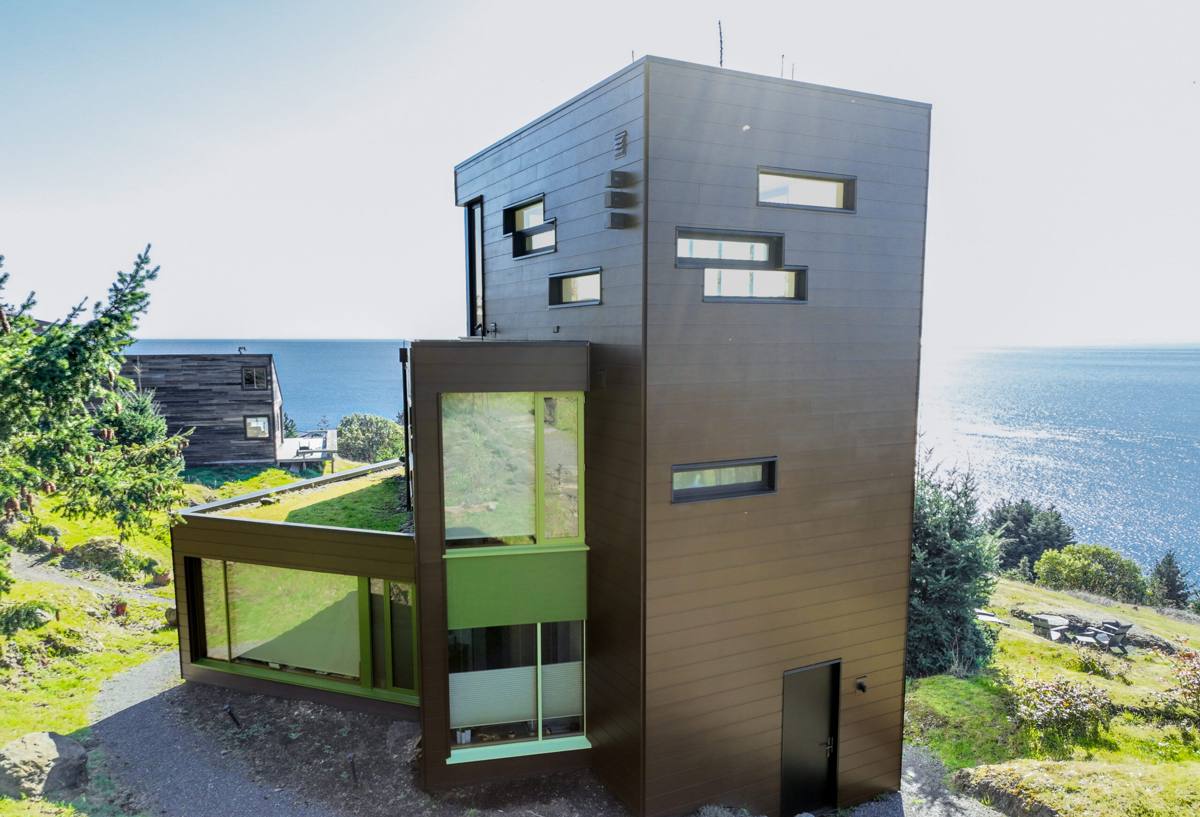
Birch Bay sits right on the water, and that changes what siding has to survive day to day. Homes a short drive inland deal mostly with rain and temperature swings. Homes in Birch Bay deal with all of that plus salt-laden air blowing off the bay, wind-driven rain that hits siding sideways instead of straight down, and a shaded, damp growing season long enough for moss and algae to get a real foothold on north- and west-facing walls. None of that is dramatic on its own, but stacked together over years it's exactly the kind of slow, cumulative exposure that finds every weak point in a siding system — a hairline gap at a butt joint, a nail popped slightly proud, a caulk line that shrank and cracked.
Repairing siding correctly in this environment means understanding that the damage you can see — a soft spot, a stain, a warped board — is usually a symptom. The cause is almost always moisture that found a way in and salt air that kept things from drying back out the way they would inland. A repair that only addresses the visible symptom without dealing with how water is getting behind the siding will fail again, often within a season or two.
How Salt Air, Driving Rain, and Moss Actually Damage Siding
Salt Air
Airborne salt is mildly corrosive and hygroscopic — it actually pulls moisture out of the air and holds it against surfaces longer than they'd otherwise stay wet. On metal fasteners and trim, that means faster corrosion. On wood-based or wood-composite siding products, it means the material spends more hours in a damp state than the same product would a few miles inland, which accelerates swelling, checking, and paint failure.
Driving Rain
Wind off the water doesn't just make rain fall harder — it pushes it sideways and upward into laps, seams, and trim joints that were designed to shed water moving straight down. This is why homes closest to the water often show repair needs at butt joints, inside corners, and around window and door trim well before the field of the siding shows any wear at all.
Moss and Algae
Shaded north and west elevations in Whatcom County stay damp for extended stretches much of the year. Moss and algae don't just look bad — a moss mat holds water against the siding surface continuously, which is a very different exposure than rain that runs off and dries. Left long enough, that constant dampness is what turns a cosmetic problem into a rot or delamination problem underneath.
Signs Your Birch Bay Home Needs Siding Repair
Most siding failures give warning signs well before they become expensive. Homeowners in this area should walk the exterior — especially the water-facing and shaded sides — a couple of times a year and look for:
- Soft or spongy spots when you press on the siding, especially near the bottom courses and around windows
- Visible gaps opening up at butt joints or where siding meets trim
- Paint that's bubbling, peeling, or failing in patches rather than evenly across a wall
- Dark staining, streaking, or a persistent musty smell near an exterior wall on the inside of the house
- Moss or algae buildup that keeps returning to the same section of wall
- Warped, cupped, or visibly separating boards
- Caulk joints that have cracked, shrunk, or pulled away from the siding
- Corroded or backed-out fasteners, especially on the windward side of the home
Any one of these alone might be minor. Two or three showing up in the same area is usually a sign that moisture has been getting behind the siding for a while.
What a Correct Siding Repair Actually Involves
Diagnose Before You Patch
A repair that starts and ends with "replace the damaged board" is a repair that's likely to come back. The first real step is figuring out how water got in — a failed flashing detail, a caulk joint that was never sealed properly, a penetration for a light fixture or hose bib that was never flashed at all. If that path isn't closed off, a new board in the same spot just buys a little time.
Check What's Behind the Siding
Once siding is opened up, the sheathing and house wrap or weather-resistive barrier underneath need to be checked for water damage. In a lot of Birch Bay repairs, this is where the real cost lives — not in the visible siding, but in soft sheathing that needs to be cut out and replaced before anything goes back on. Skipping this step to save time is one of the more common reasons repairs fail.
Match the Material and the Installation Detail
Patching in a mismatched product, or the right product installed with the wrong gap, fastening, or caulking, creates a new weak point right next to the old one. Correct repair work matches the existing siding profile and finish where possible, and follows manufacturer installation specifications for gapping, fastener placement, and flashing — not just what fits.
Rebuild the Water Management, Not Just the Surface
Proper flashing at butt joints, window and door heads, and any wall penetration is what actually keeps water from getting behind the siding again. In a driving-rain environment like Birch Bay, this detail matters more than almost anything else in the repair.
Repair or Replace? Weighing the Real Factors
Not every problem calls for full replacement, and not every problem should be patched. The decision usually comes down to how much of the wall system is affected and how the existing material is holding up overall.
| Factor | Leans Toward Repair | Leans Toward Replacement |
|---|---|---|
| Extent of damage | Isolated to one or two areas | Recurring damage across multiple elevations |
| Sheathing condition | Dry, sound sheathing found once opened up | Widespread soft or rotted sheathing |
| Age and material of existing siding | Newer, still-performing material with a localized failure | Original siding is failing product-wide (chronic paint failure, cupping, etc.) |
| Product type | Durable material (e.g., fiber cement) with a one-off installation flaw | Wood-based or vinyl product nearing the end of its practical service life |
| Cost over time | Lower upfront cost, addresses the immediate problem | Higher upfront cost, resets the clock on the whole wall system |
A straight answer, from experience: if a home's siding is failing in more than a couple of spots, or the sheathing behind it is showing damage in multiple places, repeated repairs usually end up costing more over a few years than doing the replacement once, correctly.
Why We Repair and Rebuild Using James Hardie Fiber Cement
When a repair calls for new siding material — whether that's a full section replacement or patching in board-and-batten or lap sections — we use James Hardie fiber cement exclusively. We don't install LP SmartSide, vinyl, Cemplank, Allura, or primed wood products, and in an environment like Birch Bay that's not a brand preference, it's a practical one.
Fiber cement is non-combustible and dimensionally stable, meaning it doesn't swell, shrink, or cup with the moisture cycling that salt air and driving rain put it through. James Hardie's ColorPlus finish is factory-baked onto the board rather than field-painted, which matters directly for a coastal-facing repair — factory finishes hold up better against the UV and moisture cycling that break down field-applied paint faster near open water. Hardie's HZ5 product line is engineered specifically for cold, wet climates, which fits Whatcom County's weather pattern well. And because it's backed by a transferable warranty, a correctly done Hardie repair or replacement holds its value if the home is sold.
None of that means every other product is a bad product. It means that for the exposure homes see in Birch Bay, we've standardized on the one that holds up with the least long-term maintenance burden, and we'd rather turn down work than install something we don't think will perform here.
Our Process for Birch Bay Repair Work
- On-site inspection. We walk the exterior, focusing on water-facing and shaded elevations, and identify both visible damage and likely moisture entry points.
- Open and assess. Affected siding is removed to check the condition of the sheathing and weather barrier underneath before we quote a final scope.
- Honest scope and estimate. We tell you what's actually needed — patch repair, section replacement, or a recommendation to consider full replacement if damage is widespread.
- Correct water management. Flashing, house wrap, and caulking are addressed as part of the repair, not skipped to save a step.
- Matched material install. New James Hardie material is installed to manufacturer spec for gapping, fastening, and finish.
- Cleanup and walkthrough. We review the completed work with you before we consider the job done.
After the Repair: Keeping Salt Air and Moss From Coming Back
A correct repair holds up a lot longer with a small amount of ongoing care, especially this close to the bay:
- Rinse siding periodically with fresh water to reduce salt buildup, particularly on the side of the house facing the water
- Trim back vegetation and tree cover on shaded elevations to cut down on the damp conditions moss needs to establish
- Check caulk joints at trim and penetrations once a year and re-seal any that have cracked or pulled away
- Address moss or algae early with a gentle wash rather than letting it build into a thick mat
- Keep gutters and downspouts clear so roof runoff isn't dumping extra water directly onto siding
Why It Matters That We Already Work in Birch Bay
A repair crew that mostly works inland can still do competent work, but a crew that already knows this stretch of Whatcom County shoreline knows which elevations take the worst of the wind-driven rain, how far salt exposure typically extends from the water, and how local permitting and wind exposure requirements factor into a repair scope. That familiarity shows up in fewer surprises once the siding comes off the wall — and in a repair that's built for the specific conditions this home actually sees, not a generic inland spec.
If you're seeing soft spots, recurring moss, or paint failure on your Birch Bay home, we're happy to take a look and give you a straight, no-pressure assessment of what's actually going on and what it would take to fix it right. Use the form below to request a free estimate.