 Blaine Siding
 Why Birch Bay Roofs Wear Differently Than Roofs Inland
Birch Bay sits right on the water, and that changes what a roof has to put up with year after year. The same salt-laden air that makes the waterfront pleasant also settles into shingle granules, flashing seams, and exposed fasteners, and it doesn't rinse off the way ordinary dust does. Add the wind-driven rain that comes off the Strait during winter storms — rain that hits siding and roof edges sideways instead of falling straight down — and you get water finding its way into laps and seams that would stay dry on a calmer inland lot. Then there's the moss. Whatcom County's long, damp, shaded season gives moss and algae months to get established on any roof that doesn't get much direct sun, and once it's established it holds moisture against the shingle surface long after the rain has stopped.
None of this means asphalt shingle roofing is a poor choice for Birch Bay — it's still one of the most practical, cost-effective options for this area. It means the roof has to be installed and maintained with these specific conditions in mind, not treated like a roof going on a house in a dry, inland climate.
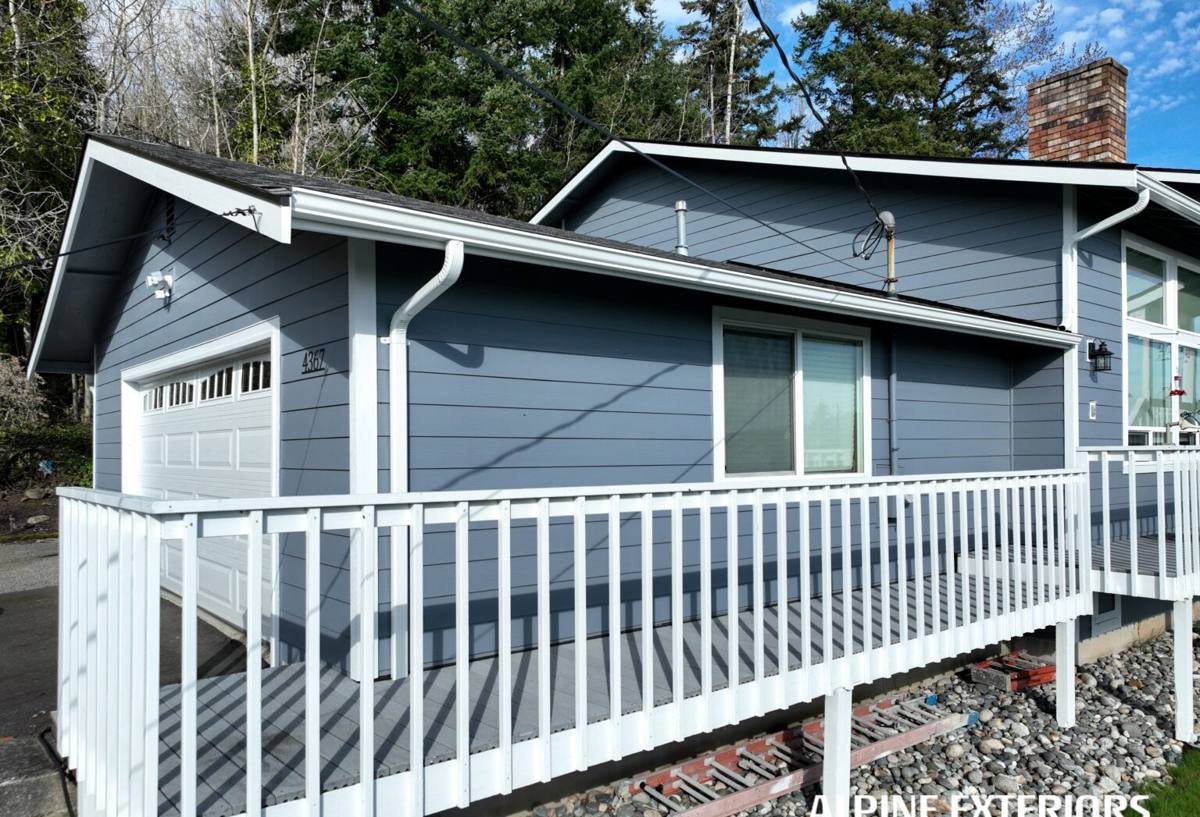
What a Correctly Installed Roof Needs to Handle Here
Underlayment and Ice-and-Water Protection
A quality synthetic underlayment is the backup layer that keeps a house dry if wind ever lifts or drives water under the shingles themselves. Along eaves, valleys, and any low-slope transitions, we use self-adhering ice-and-water shield — not because Birch Bay gets heavy ice buildup, but because those are exactly the spots where wind-driven rain and ponding water are most likely to find a way through ordinary underlayment.
Ventilation That Actually Moves Air
A roof that traps humid air underneath it is a roof that grows moss and mildew from the inside out, on the sheathing, even before it shows on the shingle surface. Balanced intake at the soffits and exhaust at the ridge keeps air moving so moisture doesn't sit and condense. This matters more here than in a dry climate because the ambient humidity is already high most of the year.
Flashing at Every Penetration
Chimneys, vents, skylights, and wall-to-roof transitions are where the vast majority of leaks start — not out in the open field of the roof. Properly formed step flashing, counterflashing, and pipe boots, sealed with materials rated for sustained UV and salt exposure, are what keep those transitions dry through years of coastal storms.
Shingle Selection Suited to Coastal Exposure
Algae-resistant (AR) shingles use copper-infused granules to slow the growth of the black streaking and moss that shaded, damp roofs are prone to. In a spot like Birch Bay, where tree cover and marine humidity both work against a roof, that feature earns its keep rather than being a marketing extra.
Signs a Birch Bay Roof Needs Attention
Because moss and salt-driven wear develop gradually, a lot of homeowners don't notice a problem until it's already inside the attic. Worth checking for, or asking a roofer to check for, on a regular basis:
- Moss or dark green growth clustered on the north- or shade-facing slopes
- Granules collecting in gutters or at the base of downspouts
- Shingle edges that look curled, cupped, or lifted, especially near ridges and eaves
- Dark streaking that doesn't wash off with rain
- Soft spots or discoloration on interior ceilings near exterior walls
- Flashing that looks rusted, separated, or has visible gaps at its edges
- Daylight visible through the roof deck when viewed from inside the attic
Any one of these on its own isn't necessarily an emergency, but a few of them together usually means it's time for a closer look before the next storm season.
Matching the Shingle to the Job
Not every asphalt shingle is built the same way, and the differences matter more in a coastal, moss-prone environment than they would somewhere drier. Here's how the common options compare for a house like yours in Birch Bay:
| Shingle Type | Typical Lifespan | Coastal/Moss Performance | Best Fit |
|---|---|---|---|
| 3-tab (economy) | 15–20 years | Lower wind rating, no algae resistance standard | Budget-limited projects, rental or secondary structures |
| Architectural / dimensional | 25–30 years | Higher wind rating, most lines available with AR granules | Most Birch Bay homes — the standard recommendation |
| Impact-resistant (Class 4) | 25–30+ years | Same coastal benefits as architectural, plus better resistance to storm debris | Exposed, treed, or storm-prone lots; may qualify for insurance discounts |
| Premium/designer | 30+ years | Heaviest mat, often best algae-resistance warranties | Homeowners prioritizing longevity and appearance over upfront cost |
For most Birch Bay properties, an architectural shingle with an algae-resistance warranty is the sweet spot between upfront cost and how well it holds up against moss and salt air over the years. Where a lot backs up to heavy tree cover or gets more wind exposure, stepping up to impact-resistant is worth pricing out.
How Our Installation Process Works
- Roof and attic inspection. We check the existing deck, ventilation, and any signs of moisture damage before quoting anything — a new shingle layer on a compromised deck just hides the problem.
- Tear-off and deck assessment. Old shingles and underlayment come off completely so we can inspect the sheathing underneath and replace any soft or delaminated sections.
- Ice-and-water shield and underlayment. Applied at eaves, valleys, and penetrations first, then synthetic underlayment across the full field.
- Flashing. New step, counter, and pipe flashing installed or replaced at every wall, chimney, and vent transition.
- Shingle installation. Installed per manufacturer specification for nailing pattern and exposure — the details that keep a wind and warranty rating valid.
- Ventilation check. Ridge and soffit venting confirmed or corrected so the finished roof can actually breathe.
- Final walkthrough and cleanup. Site cleared of debris and nails, and we walk the finished roof with you before calling the job done.
Repair or Full Replacement — What Drives the Decision
Not every Birch Bay roof issue calls for a full replacement. The right call usually comes down to a handful of factors:
| Factor | Leans Toward Repair | Leans Toward Replacement |
|---|---|---|
| Age of roof | Under 15 years | Approaching or past 20–25 years |
| Extent of damage | Isolated area (flashing, one slope, a few shingles) | Widespread granule loss, curling, or moss across most slopes |
| Deck condition | Solid, no soft spots | Soft, stained, or delaminated sheathing found |
| Moss/algae history | First occurrence, treatable | Recurring despite cleaning, staining into the mat |
| Interior signs | None | Ceiling stains, attic moisture, or musty odor |
We'll always tell you honestly which category a roof falls into rather than defaulting to the bigger job — plenty of Birch Bay roofs just need targeted flashing repair or a section reshingled to be sound for years yet.
Living With a Long Moss Season
Even a well-installed roof needs some upkeep in this climate. A few habits go a long way:
- Keep gutters clear so water isn't backing up under the shingle edge
- Trim back overhanging branches to cut down on shade and debris buildup
- Have moss treated (not pressure-washed, which strips granules) as soon as it appears
- Schedule a roof check after major windstorms, not just once a year on a fixed date
- Watch attic ventilation — a musty attic smell in fall or winter is worth investigating early
None of this replaces a properly built roof, but it's what keeps a good installation performing for its full expected lifespan instead of losing years to moss and moisture damage that could have been caught early.
Why a Crew That Already Works Birch Bay Matters
Roofing crews that mostly work drier, inland areas sometimes underbuild for what a waterfront Whatcom County property actually experiences — lighter underlayment, minimal flashing detail, standard shingles instead of algae-resistant ones. It's not usually dishonesty; it's just that their normal spec is calibrated for a different climate. Working Birch Bay and the surrounding Blaine area regularly means we've seen which details actually matter here: where wind-driven rain gets in, which slopes hold onto moss the longest, and which flashing details hold up through a full winter of Strait storms. That local pattern-recognition is worth more than any brochure claim, and it's the difference between a roof that looks right on installation day and one that's still performing correctly five winters later.
If your Birch Bay roof is showing any of the signs above, or you're just planning ahead, we're glad to take a look and give you a straight answer about repair versus replacement. Reach out for a free, no-pressure estimate — the form below gets you started.