 Blaine Siding
 Why Bellingham Homes Need the Right Siding, Not Just New Siding
Bellingham sits in a tough spot for exterior materials: close enough to the water to pick up salt-laden air, wet enough for months at a stretch to keep wood-based products damp longer than they were engineered to handle, and shaded enough in older, tree-lined neighborhoods that moss and algae get a running start every fall. None of that is exotic weather. It's just persistent, and persistent is what wears siding out. A re-side here isn't a cosmetic upgrade — it's a chance to put a cladding system on the house that's actually built for the exposure it's going to face for the next 30-plus years.
We install James Hardie fiber cement siding exclusively, and we work Bellingham regularly enough to know which sides of a house take the worst of the weather, where moisture tends to collect, and what details get skipped on jobs that don't hold up. This page covers what a correct fiber cement install looks like for a Bellingham home specifically — not siding in general.
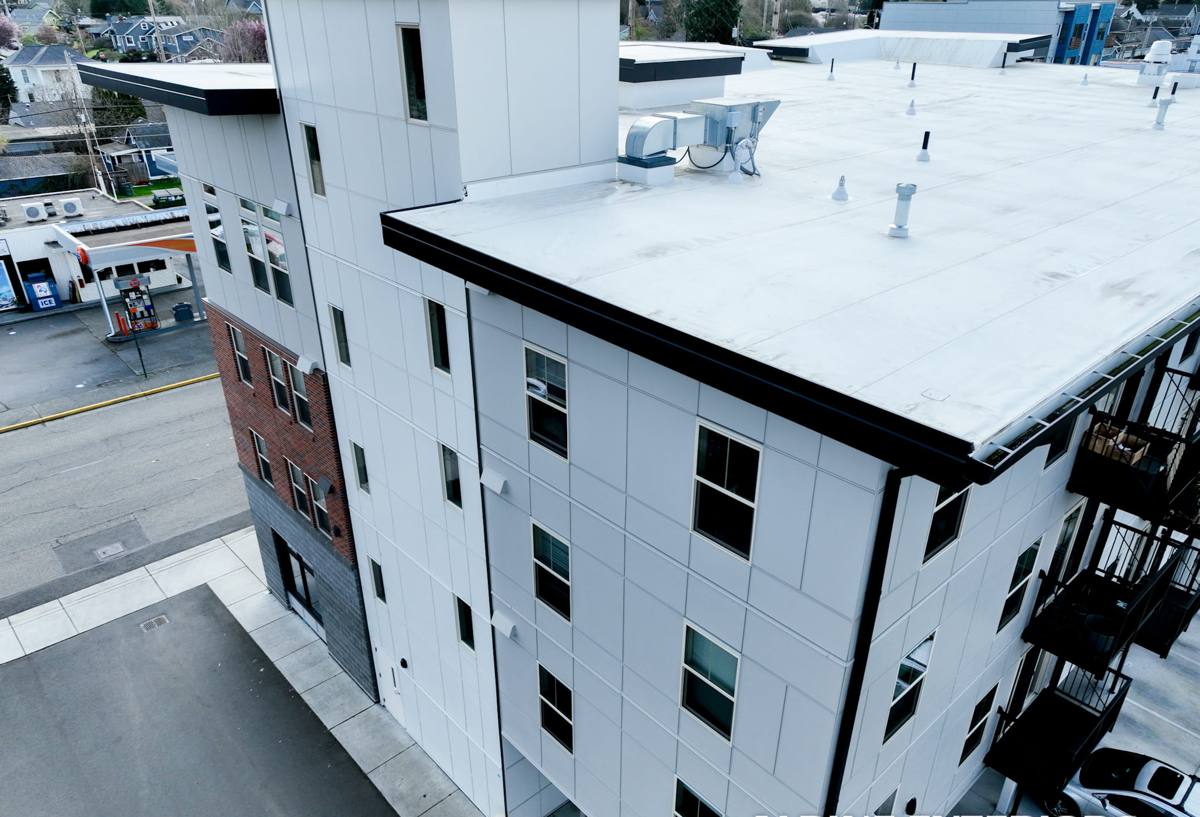
What the Bellingham Climate Actually Does to Siding
Salt Air
Homes closer to Bellingham Bay and the surrounding waterways deal with airborne salt that accelerates corrosion on fasteners, flashing, and any metal trim that isn't rated for it. It also speeds up the breakdown of finishes that aren't factory-cured. Paint applied on-site, especially over wood or engineered wood siding, tends to chalk and fade faster in this exposure than manufacturers' brochures suggest.
Driving Rain
Wind-driven rain off the Salish Sea doesn't just hit siding — it gets pushed sideways and upward into laps, seams, and butt joints that a calm-weather install might get away with leaving loose. Whatcom County's rain isn't the heaviest in the state, but it's frequent and often comes with wind, which is the combination that actually finds gaps in a siding system.
The Long Moss Season
Shaded lots, mature trees, and damp air add up to a moss and algae season that can run eight or nine months of the year on north-facing walls and anything under heavy tree cover. Moss holds moisture against the siding surface long after a rain has passed, which is exactly the condition that rots wood substrates and lifts paint.
Why Fiber Cement Is the Right Material Here
Fiber cement doesn't rot, doesn't swell with moisture, and isn't a food source for moss the way wood fiber can be. It's also non-combustible, which matters more each year as regional wildfire smoke seasons stretch longer — it's not the primary reason to choose it in a coastal county like Whatcom, but it's a real, permanent benefit that costs nothing extra. We install James Hardie specifically because its ColorPlus finish is baked on at the factory under controlled conditions, not brushed or sprayed on-site at the mercy of Bellingham's weather window. That finish is engineered to resist fading and holds up to the coastal UV and salt exposure far better than a field-applied coat.
James Hardie's HZ5 product line is formulated for regions with more freeze-thaw cycling; Bellingham's marine climate is milder than that, but the broader HardiePlank and HardiePanel lines are still built around the same moisture-resistant fiber cement formulation that simply doesn't behave like wood in wet weather. That's the core reason we don't install cedar, primed spruce, or wood-based composite sidings on homes in this area — they ask a homeowner to fight the exact conditions Bellingham throws at a house year-round.
How Fiber Cement Compares to Alternatives in This Climate
| Material | Moisture Behavior | Moss/Algae Resistance | Finish Longevity | Maintenance |
|---|---|---|---|---|
| James Hardie Fiber Cement | Does not absorb/swell; dimensionally stable when wet | Not a food source; cleans easily | Factory-cured ColorPlus, resists fading | Occasional wash; repaint only if ever needed, decades out |
| Cedar / Primed Wood | Absorbs moisture, prone to swelling and rot at joints | Organic surface feeds moss/algae growth | Field-applied paint, recoat every 5-8 yrs | Regular inspection, caulking, repainting |
| Vinyl | Doesn't rot, but can warp/crack in impact or heat | Surface film buildup, needs washing | Color molded in but fades/chalks over time | Low, but limited repair options once faded |
| LP SmartSide (engineered wood) | Resin-treated but still wood-based; edge exposure is the failure point | Better than raw wood, still organic substrate | Factory finish, but sensitive to installation gaps | Moderate; caulking and edge sealing critical |
What a Correct Fiber Cement Install Involves
The material only performs as well as the installation. On Bellingham homes we pay particular attention to a handful of details that matter more here than in drier climates:
- Weather-resistive barrier and rainscreen gap: A drainage plane behind the siding lets any moisture that does get past the cladding dry out instead of sitting against the sheathing — important given how long damp periods last here.
- Flashing at every penetration: Windows, doors, hose bibs, and vents all need proper head flashing and kick-out flashing where rooflines meet walls. This is the single most common gap we find on older siding jobs in this area.
- Correct fastener spacing and clearance: Hardie's install specs call for specific nail placement and a clearance gap above rooflines, decks, and grade — those clearances exist specifically to keep the bottom edge of the siding from sitting in standing water or snow melt.
- Caulking only where Hardie specs call for it: Over-caulking traps moisture; under-caulking lets it in. Following the manufacturer's installation manual, not habit, is what keeps this right.
- Factory-cut and painted edges kept intact: Field cuts expose raw fiber cement edges, which need to be sealed per spec, especially on a job that will face salt air and driving rain.
Our Process for a Bellingham Job
1. On-Site Assessment
We walk the exterior looking at exposure by wall — which sides face prevailing wind and rain, where moss has been a recurring problem, and where existing moisture damage (soft trim, stained soffits, bubbled paint) shows up. This tells us where extra flashing and drainage attention are worth the added labor.
2. Tear-Off and Sheathing Check
Old siding comes off and we inspect the sheathing underneath. Any rot or soft spots get addressed before new material goes up — covering a compromised wall with new siding just hides a problem that will resurface.
3. Weather Barrier and Drainage Plane
We install a code-compliant weather-resistive barrier with a rainscreen gap, which is especially valuable in a climate where walls stay damp for extended stretches.
4. Hardie Installation to Manufacturer Spec
Fastening, clearances, flashing, and joint treatment follow James Hardie's published installation guidelines, not shortcuts. This is also what keeps the manufacturer's warranty valid.
5. Trim, Caulk, and Final Detailing
Corners, trim boards, and penetration points get finished per spec, then the job gets a final walkthrough.
What This Costs and What Drives the Price
We don't quote exact numbers without seeing the house, but a few things consistently move the price on a Bellingham re-side:
| Factor | Why It Matters |
|---|---|
| Existing siding removal | Multiple layers or damaged sheathing add tear-off and repair time |
| Home size and wall complexity | More corners, gables, and dormers mean more cutting and flashing detail |
| Product line and profile | Lap width, panel type, and trim style all affect material cost |
| Access and site conditions | Tight lots, tree cover, or slope affect staging and labor time |
| Existing moisture damage | Rotted sheathing or framing found during tear-off needs repair before siding goes on |
Why Hiring a Crew That Already Works Bellingham Matters
A crew that only occasionally works this far north treats every job as a generic install. A crew that works Bellingham and the surrounding Whatcom County towns regularly already knows which walls take the worst weather, has a feel for how long moss takes to return on a shaded elevation, and doesn't have to relearn local permitting or typical framing quirks on every job. That familiarity shows up in the details that don't get skipped — the flashing that's easy to leave out, the clearance gap that's easy to shave, the caulk joint that's easy to rush.
If your current siding is showing moss staining that keeps coming back, paint that's failing faster than it should, or soft spots near trim and window sills, it's worth having it looked at before those issues reach the sheathing. We're happy to come take a look, walk the exterior with you, and give you a straightforward, no-pressure estimate on what a correct James Hardie install would look like for your home.