 Blaine Siding
 Roofing for Sumas Homes in a Tough Climate
Sumas sits inland from Blaine but shares the same weather pattern that wears down roofs across Whatcom County: salt-laden air pushing in off the coast, long stretches of driving rain through fall and winter, and shaded, damp conditions that keep moss growing for most of the year. None of that is unusual for this part of Washington. But it does mean a roof here has to be built and maintained differently than a roof in a drier inland climate, and it's a big part of why so many asphalt shingle roofs in this area fail early — not because the shingles were bad, but because the install didn't account for how much moisture this roof was actually going to see.
This page covers what we look at, what we install, and how we work when a Sumas homeowner calls us for an asphalt shingle roof — whether that's a full replacement or a roof that's showing its age and needs an honest assessment.
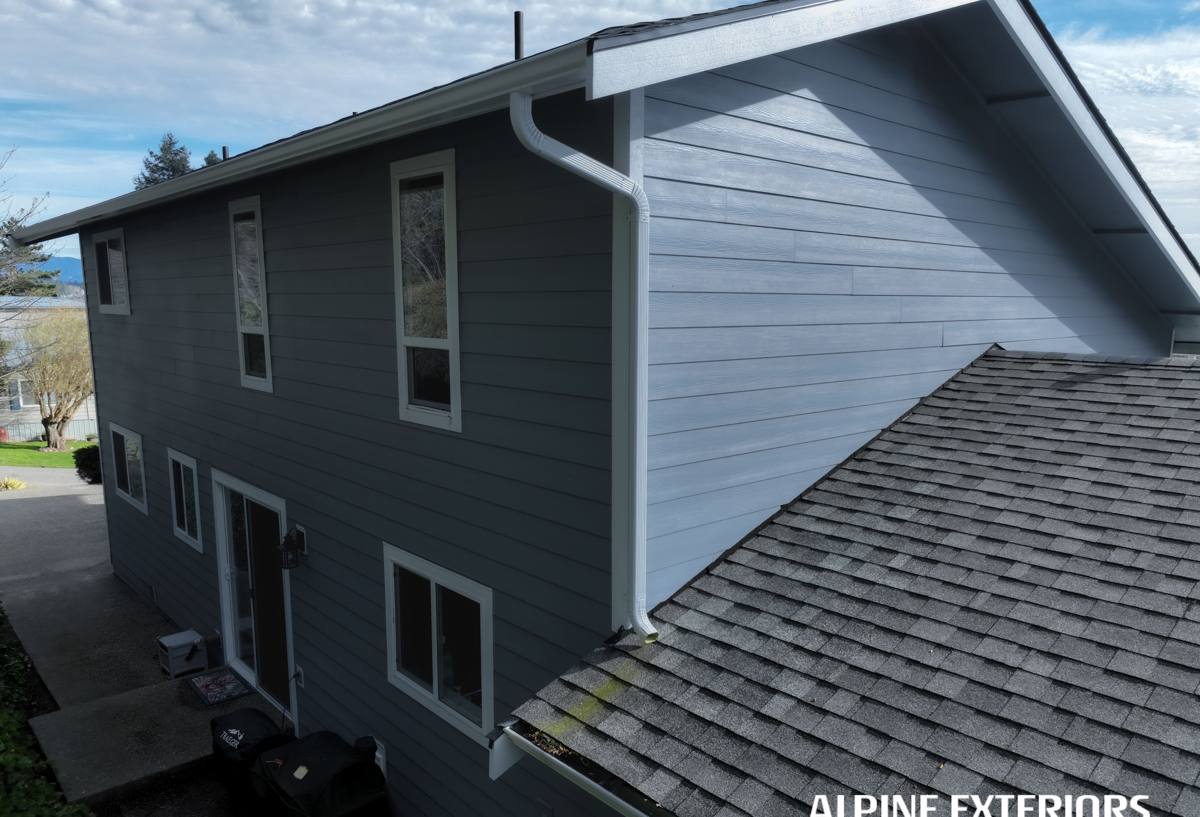
What Moisture and Moss Actually Do to a Shingle Roof
Asphalt shingles are a proven, cost-effective roofing material, and there's nothing wrong with choosing them for a home in this climate — as long as the roof underneath them is set up to shed water fast and stay dry between storms. The problems we see on older or poorly installed roofs in this area usually trace back to a handful of causes:
- Moss and organic growth holding moisture against the shingle surface, which accelerates granule loss and shortens shingle life
- Undersized or missing ice-and-water shield at eaves and valleys, where wind-driven rain gets pushed backward under the shingle edge
- Poor attic ventilation, which traps warm moist air against the underside of the roof deck and speeds up rot and shingle deterioration from below
- Flashing that was reused or improperly sealed during a prior re-roof, especially around chimneys, skylights, and wall-to-roof transitions
- Nailing patterns that don't meet manufacturer specs, which shows up years later as shingles lifting or blowing off in wind events
Salt air adds a second layer to this. It accelerates corrosion on exposed metal — nail heads, flashing, vent caps — which is why we're deliberate about the materials we use on roofs this close to the coast, even a few miles inland.
Moss Season Isn't Just Cosmetic
Moss on a roof looks bad, but the real damage is what it does underneath. Moss holds water against the shingle mat, keeps that section of roof from ever fully drying out, and its root structure can lift shingle edges over time. Once moss gets established on a north-facing slope or a shaded section, it tends to come back every year unless the underlying cause — usually shade, low slope, or poor airflow — is addressed alongside the roof itself.
What a Correct Asphalt Shingle Installation Looks Like Here
A shingle roof is a system, not just a layer of shingles nailed to plywood. For a Sumas home, the system needs to account for wind-driven rain and sustained dampness specifically. Here's what we build into every install:
- Ice-and-water shield at all eaves, valleys, and roof penetrations — extended further up-roof than the code minimum in areas that see heavier wind-driven rain
- Synthetic underlayment across the full deck for a secondary water barrier that won't degrade the way old felt paper does in a wet climate
- Balanced attic ventilation — intake at the soffits, exhaust at the ridge — sized to the attic's square footage, not just whatever vents were already there
- New flashing at chimneys, skylights, and wall intersections rather than reusing old flashing, which is one of the most common shortcuts on cheaper re-roofs
- Manufacturer-spec nailing — correct nail count, placement, and pattern for the specific shingle line, not a generic pattern applied to every job
- Starter strip and ridge cap matched to the shingle system, which affects both wind resistance and how well the warranty actually holds up if you ever need it
None of this is exotic. It's the difference between a roof that's built to the minimum and a roof that's built for the weather it's actually going to face for the next 25-30 years.
Our Process for a Sumas Re-Roof
1. Inspection and Honest Assessment
We start on the roof, not from a photo or a satellite estimate. We check the deck condition, existing ventilation, flashing points, and how much moss or granule loss is present. If a roof genuinely has more life left in it, or a repair will hold for a few more years, we'll tell you that instead of pushing a full replacement.
2. Clear, Written Scope
You get a written estimate that spells out the shingle line, underlayment, ice-and-water shield coverage, ventilation work, and flashing — not a vague lump-sum number. If moss removal, deck repair, or extra ventilation work is needed, that's called out up front, not added as a surprise mid-project.
3. Tear-Off and Deck Check
We remove the old roofing down to the deck and inspect for soft spots or water damage before anything new goes down. Damaged decking gets replaced — installing a new roof over a compromised deck just moves the problem a few years down the road.
4. Install
Underlayment, ice-and-water shield, flashing, shingles, and ventilation go in as a coordinated system, in the sequence and to the spec the manufacturer requires for the warranty to be valid.
5. Cleanup and Walkthrough
Magnetic sweep for nails, full site cleanup, and a walkthrough so you know what was done and what to expect from the roof going forward, including basic moss-prevention upkeep.
Shingle Options: What We Recommend and Why
Not every shingle line is a good fit for a coastal, moss-prone climate. We steer most Sumas homeowners toward architectural (dimensional) shingles over basic 3-tab, mainly because of how each performs under sustained wind and moisture — not because 3-tab is a bad product outright.
| Factor | 3-Tab Shingle | Architectural Shingle |
|---|---|---|
| Wind resistance | Lower rating, more prone to edge lift in gusts | Higher rating, better in sustained coastal wind |
| Moisture/moss resistance | Thinner mat holds less resilience over time | Heavier mat, often available with algae-resistant granules |
| Typical lifespan here | 15-20 years with regular upkeep | 25-30 years with regular upkeep |
| Upfront cost | Lower | Moderate |
| Appearance | Flat, uniform look | Dimensional, heavier shadow line |
We'll always give you the honest trade-off for your specific roof and budget rather than steering everyone to the same product. If a 3-tab shingle makes sense for your situation, we'll say so.
What Drives the Cost of a Sumas Re-Roof
| Cost Factor | Why It Matters |
|---|---|
| Roof size and pitch | Steeper roofs take longer and require more safety setup |
| Number of layers to remove | Tear-off of multiple old layers adds labor and disposal cost |
| Deck condition | Rotted or soft decking found during tear-off needs replacement before shingles go on |
| Shingle line chosen | 3-tab vs. architectural vs. premium impact material cost directly |
| Ventilation work | Adding or upgrading soffit/ridge venting is often necessary but not always priced into a bare-minimum quote |
| Flashing and penetrations | Chimneys, skylights, and multiple roof planes add complexity |
Be cautious of a quote that's dramatically lower than others — it's usually missing one of these line items, most often ventilation work or full flashing replacement, and that gap tends to show up as a leak a few years later.
Why a Crew That Already Works This Area Matters
A roofing crew that regularly works Blaine and the surrounding Whatcom County communities, including Sumas, already knows what this climate does to a roof over time. That's not marketing — it changes real decisions on the job: how far up-roof the ice-and-water shield needs to run, how much ventilation an attic actually needs given the humidity here, and which flashing details tend to fail first on homes exposed to salt air and sustained rain. A crew coming from a drier region without that local experience is more likely to build to a generic spec instead of to what this specific climate demands.
Simple Maintenance That Extends Roof Life Here
- Keep gutters clear so water isn't backing up under the shingle edge during heavy rain
- Trim back overhanging branches to reduce shade and debris that feed moss growth
- Have moss treated or gently removed before it spreads, rather than after it's established
- Check attic ventilation isn't blocked by insulation at the soffits
- Get a roof looked at after any major wind event, even if there's no visible damage from the ground
If you're in Sumas and dealing with an aging shingle roof, visible moss, or just want an honest read on how much life is left, we're glad to take a look. Fill out the form below for a free, no-pressure estimate.