 Blaine Siding
 Lynden's Roofing Season Is Longer and Wetter Than Most Homeowners Expect
Lynden sits inland from the coast in Whatcom County, but that doesn't spare it from the same wet-weather cycle that defines roofing work across this whole corner of Washington. Rain here isn't a season, it's most of the year, and a roof spends far more time damp than dry. Add in the humid air pushing up the Nooksack Valley, the shaded tree lines that surround a lot of Lynden properties, and the occasional salt-tinged marine air that rides inland during winter storms off the Strait, and you get a climate that's genuinely hard on asphalt shingles if the install wasn't done right the first time.
The biggest enemy isn't the rain itself, it's what the rain leaves behind: moss and algae. A roof here can go from clean to visibly streaked and mossy in a couple of seasons if airflow, granule quality, and drainage details weren't handled correctly. That's the lens we bring to every asphalt shingle job we do for Lynden homeowners, not just "install shingles," but install a roof system built to shed water fast and resist the growth that thrives in this climate.
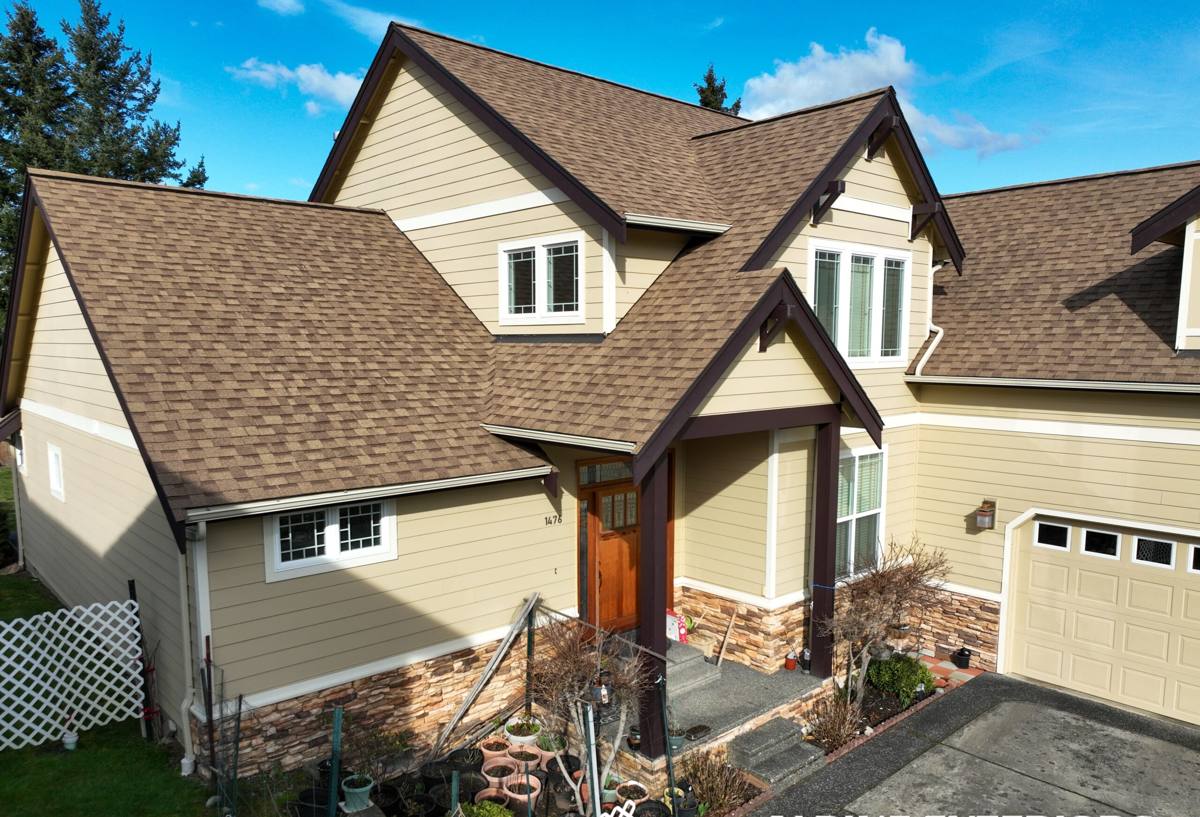
What a Correct Asphalt Shingle Install Actually Involves
Asphalt shingles look like a simple product from the ground, but the shingle itself is only one layer of a roofing system. In a climate like Lynden's, the layers underneath and around the shingles matter as much as the shingles themselves.
Underlayment and Water-Entry Points
Synthetic underlayment goes down across the full deck as the primary water barrier beneath the shingles. At eaves, valleys, and anywhere water concentrates, we add self-adhering ice-and-water membrane, an extra layer that seals around fastener penetrations and holds up if wind-driven rain ever gets under the shingle course above it. Valleys, chimney flashing, skylight curbs, and pipe boots are the parts of a roof that fail first when they're rushed, so these get built up properly rather than caulked and covered.
Ventilation and Deck Condition
A shingle roof that can't breathe traps moisture in the attic, which shortens the life of the decking and the shingles from underneath, not just from weather above. We check intake and exhaust balance as part of every re-roof and correct it when the existing setup is inadequate. We also inspect the decking once the old roofing is off; any soft or delaminated plywood gets replaced before a single new shingle goes down, since nailing shingles to a compromised deck undermines the whole job regardless of the shingle quality.
Tear-Off vs. Overlay
Washington building code allows a second layer of shingles over an existing layer in some cases, but we don't recommend it as our standard practice. An overlay hides the condition of the decking, adds weight, and traps moisture between layers. A full tear-off costs more up front but lets us inspect and fix what's underneath, which matters more here than in drier climates where a hidden problem might sit dormant for years.
Choosing a Shingle That Holds Up to Whatcom County Weather
Not every shingle line performs the same way in a wet, shaded, moss-prone climate. The main things worth comparing are the algae-resistant granule treatment, the wind rating, and the warranty structure, since those are what actually predict how the roof looks and performs five and ten years out, not the color or brand name on the wrapper.
| Shingle Type | Typical Lifespan | Best Fit For | Trade-Offs |
|---|---|---|---|
| 3-tab | 15-20 years | Budget-conscious re-roofs, rentals | Lower wind rating, less dimension, shows wear sooner |
| Architectural / dimensional | 25-30 years | Most Lynden homes | Higher upfront cost, better wind and impact resistance |
| Premium / designer | 30+ years | Higher-visibility roofs, steep pitches | Highest cost, longer lead time on special orders |
For this climate specifically, we push algae-resistant (AR) granules as a baseline, not an upgrade. Standard granules without that treatment will show blue-black streaking here within a few years, and once algae takes hold it's a cosmetic problem that's genuinely hard to reverse without professional cleaning. We treat AR granules the same way we treat proper flashing: a standard, not an option to upsell.
Our Process, Start to Finish
- On-site inspection. We walk the roof, check the attic for ventilation and moisture signs, and assess decking condition before quoting anything.
- Written estimate. A clear scope covering tear-off, decking allowance, underlayment, flashing details, shingle selection, and cleanup, no vague line items.
- Scheduling around weather. We plan install windows with realistic dry stretches in mind, since an exposed deck in a surprise downpour is a problem we avoid rather than manage.
- Tear-off and deck inspection. Old roofing comes off, decking gets inspected and repaired as needed, and we document anything unexpected before covering it up.
- Underlayment, flashing, and shingle install. Built in the order that actually keeps water out, not the order that's fastest.
- Cleanup and magnetic sweep. Full site cleanup including a nail sweep of the yard and driveway, not just the roof.
- Final walk-through. We go over the finished roof and the warranty paperwork with you directly.
Living With a Shingle Roof in a Moss-Prone Climate
Even a correctly installed roof needs basic upkeep in this environment. Moss and debris buildup are the two things that shorten an otherwise sound roof's life the most, and both are manageable with a little routine attention.
- Keep overhanging branches trimmed back to cut down on shade and falling debris that traps moisture on the roof surface.
- Clear gutters at least twice a year, more often if the property has fir or cedar trees nearby, since clogged gutters back water up under the shingle edge.
- Have moss physically removed by a professional rather than pressure-washed, since pressure washing strips granules and shortens shingle life.
- Watch for zinc or copper strips as a preventive option near the ridge, which reduce moss regrowth over time as rain carries trace metal down the roof plane.
- Schedule a roof check after any major windstorm, since lifted or cracked shingles are easy to miss from the ground.
Signs Your Lynden Roof Needs Attention
Most roofing failures don't happen suddenly, they build up over a few wet seasons. Homeowners who catch these early usually deal with a repair; homeowners who don't usually end up dealing with interior damage as well as the roof itself.
- Granules collecting in gutters or at downspout outlets, a sign the shingle surface is wearing thin
- Dark streaking or green-black patches, especially on north-facing or shaded slopes
- Shingles that look cupped, curled, or cracked at the edges
- Daylight visible through the roof deck from inside the attic
- Soft spots underfoot or visible sagging along the roofline
- Water stains on interior ceilings, particularly after a heavy rain event
Why a Crew That Already Works Lynden Matters
Roofing work in Whatcom County isn't identical everywhere in it, and a crew that regularly works Lynden and the surrounding Blaine area brings a few practical advantages over one that doesn't. We already know the permitting process with the relevant local jurisdiction, so paperwork doesn't stall a job. We know how to read this specific weather pattern well enough to schedule tear-offs with a realistic dry window instead of gambling on a forecast. And because we're not driving in from out of the area, warranty callbacks and follow-up service don't come with a long wait or a trip charge tacked on. For a roof, which is the single most weather-exposed part of a house, that local familiarity translates directly into a better-fitted install and faster response if something needs attention down the road.
What Affects the Cost of an Asphalt Shingle Roof in Lynden
Every roof is priced on its own specifics, but the factors that move the number are consistent. Knowing them ahead of time makes it easier to compare estimates apples-to-apples.
| Factor | Why It Matters |
|---|---|
| Roof size and pitch | Steeper roofs take longer, require more safety setup, and use more material per square |
| Number of layers to remove | Tear-off of multiple existing layers adds labor and disposal cost |
| Decking condition | Rotted or delaminated plywood found during tear-off adds material and labor to replace |
| Roof complexity | Valleys, dormers, skylights, and chimneys all add flashing detail and time |
| Shingle tier | 3-tab, architectural, and premium lines carry different material costs |
| Access and site conditions | Tree cover, tight driveways, and staging space affect equipment and labor time |
We'd rather walk a homeowner through these factors on-site than quote a number over the phone with no inspection behind it. A roof estimate that skips the attic and the decking condition is a guess, not a quote.
Get a Straight Answer on Your Roof
If your Lynden roof is showing moss, granule loss, or you're just past due for an honest look at its condition, we're happy to come take a look. The estimate is free, there's no pressure attached to it, and you'll get a clear explanation of what we see and what it would take to fix it. Use the form below to get started.