 Blaine Siding
 Why Sumas Roofs Wear Differently Than Roofs Inland
Sumas sits at the northern edge of Whatcom County, close enough to the water and the border lowlands that homes here take on a specific mix of weather stress: damp, salt-tinged air moving in off the coast, long stretches of driving rain through fall and winter, and a moss season that can run nine months out of the year in shaded yards. None of that is dramatic on any given day. It's the accumulation that gets roofs — granule loss from constant moisture cycling, moss roots working into shingle mat, and fasteners and flashing that corrode faster than they would in a drier inland climate. A roof installed without that pattern in mind will look fine for a few years and then fail early, usually starting at the valleys, the north-facing slopes, and anywhere debris collects.
A correctly installed roof in this area isn't a different product than what's sold anywhere else — it's the same materials put down with attention to the details that actually matter here: underlayment coverage, ventilation balance, flashing at every transition, and a plan for shedding water fast instead of letting it sit.
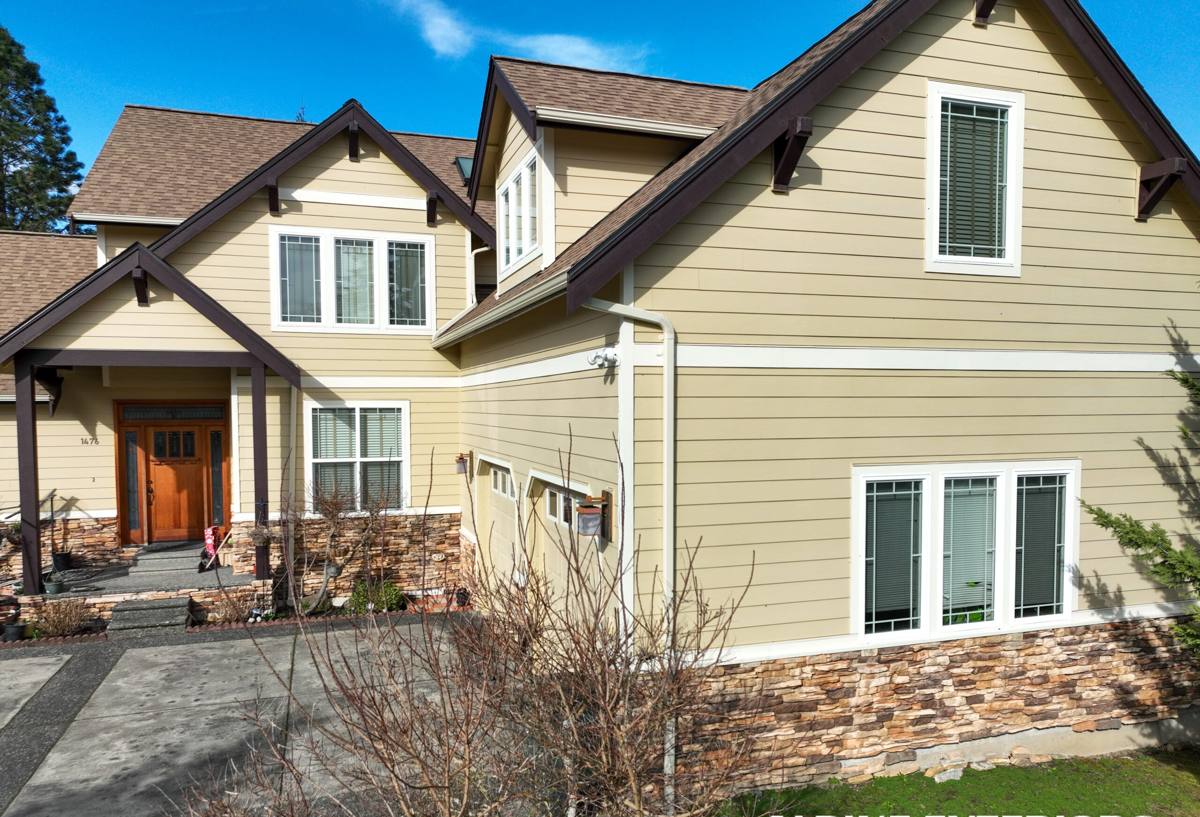
Signs a Sumas Home Needs a New Roof, Not Another Repair
Roof replacement is a bigger decision than a repair, so it's worth being honest about when a repair still makes sense versus when it's time to start over. Common signs we look for on inspection visits:
- Granules collecting in gutters or at downspout outlets, especially after the first hard fall rains
- Shingles that are cupping, curling at the edges, or visibly thinned in patches
- Moss or algae established in the shaded slopes, not just surface film but growth with roots in the mat
- Soft spots or sagging in the decking, felt when walking the roof or seen from inside the attic
- Daylight visible through the roof deck, or staining on attic sheathing and insulation
- A roof already past 20–25 years for asphalt shingle, regardless of how it looks from the ground
If a roof is showing one or two of these in isolation, targeted repair can buy real time. If several are showing together, or the decking itself is compromised, patching becomes a short-term fix that costs more in the long run than starting fresh.
What a Correct New Roof Installation Actually Involves
Tear-Off and Deck Inspection
We remove the existing roofing down to the deck rather than layering over old material. Layering hides problems and voids most manufacturer warranties. Once the deck is exposed, we check every sheet of sheathing for soft spots, delamination, or water damage — this is the point where hidden moss and moisture damage from years of wet slopes shows up. Any bad decking gets replaced before anything new goes down; it's not a place to cut corners in a climate this wet.
Underlayment and Ice/Water Protection
Given how much driving rain this area sees, underlayment coverage matters more than the shingle brand printed on the wrapper. We run synthetic underlayment across the full deck and self-adhering ice-and-water membrane at the eaves, valleys, and any roof-to-wall transitions — the exact spots where wind-driven rain gets pushed uphill under the shingle line instead of running off.
Flashing at Every Penetration
Chimneys, skylights, vent pipes, and wall intersections are where the large majority of roof leaks actually start — not in the open field of shingles. New step flashing, counter-flashing, and pipe boots go in at every one of these, not just wherever the old flashing happens to be reused.
Ventilation Balance
A roof that traps warm, moist attic air accelerates moss growth from underneath and shortens shingle life from the inside out. We check intake at the soffits and exhaust at the ridge or roof vents, and correct the balance where it's off — this is one of the most commonly skipped steps in roof replacement and one of the most consequential in a damp climate.
Field Installation
Shingles, panels, or shakes go down to manufacturer nailing and exposure specs, not shortcuts. Proper fastener count and placement is what keeps a roof intact through the windstorms that come through this part of Whatcom County in fall and winter.
Material Options for Sumas Homes
There's no single "right" roofing material — the right choice depends on budget, roof pitch, house style, and how much moss and moisture resistance a homeowner wants to pay for up front versus manage over time.
| Material | Typical Lifespan | Moss/Moisture Behavior | Maintenance |
|---|---|---|---|
| Architectural Asphalt Shingle | 25–30 years | Good with proper underlayment; needs periodic moss treatment on shaded slopes | Low to moderate |
| Standing Seam Metal | 40–50+ years | Sheds water and moss growth very well; smooth surface resists debris buildup | Low |
| Cedar Shake | 20–30 years with care | Attractive but absorbs moisture; requires more diligent upkeep in a wet climate | High |
| Composite/Synthetic Shake | 30–50 years | Mimics cedar look without the moisture absorption; consistent performance | Low to moderate |
For most homes in the Sumas area, we recommend architectural asphalt or standing seam metal as the practical middle ground — both handle sustained rain well and, installed correctly, resist moss far better than an aging or improperly ventilated roof of any material. We'll walk through what fits a specific roof and budget rather than pushing one product across every house.
Our Installation Process
- On-site inspection and estimate — we walk the roof, check the attic, and measure before quoting, not after
- Material selection — honest comparison of options based on the roof's slope, exposure, and the homeowner's budget
- Scheduling around weather — we plan installs for dry windows and can stage the job to keep the deck protected if conditions shift mid-project
- Tear-off and deck repair — full removal, deck inspection, and replacement of any compromised sheathing
- Underlayment, flashing, and ventilation correction — the parts of the job that determine how the roof performs in five and ten years, not just on day one
- Field installation — shingles, panels, or shakes installed to spec with proper fastening
- Final walkthrough — cleanup, debris check (including magnetic sweep for stray nails), and a review of the finished roof with the homeowner
Why a Crew That Already Works Sumas Makes a Difference
Roofing crews that work across a wide, varied territory tend to install to a generic standard. A crew that regularly works Sumas and the surrounding Whatcom County towns knows which slopes on which house orientations grow moss fastest, which older neighborhoods tend to have deck framing that needs extra attention, and how to sequence a job around the region's rain patterns instead of guessing. That local pattern recognition is what keeps a new roof from repeating the same weak points as the one it replaced. It also means faster response if a warranty question or a storm-related concern comes up after the job is done — no waiting on a crew that's an hour and a half away.
Cost Factors Worth Understanding
Pricing on a new roof depends on more than square footage, and it's worth knowing what actually moves the number before getting quotes:
| Factor | Why It Matters |
|---|---|
| Roof pitch and complexity | Steep or multi-plane roofs take longer and require more safety setup |
| Layers to remove | Tear-off of multiple old layers adds labor and disposal cost |
| Deck condition | Rotted or soft sheathing found during tear-off requires replacement before install |
| Material choice | Asphalt, metal, and composite carry different material and labor costs |
| Ventilation and flashing work | Correcting inadequate ventilation or old flashing adds scope but prevents early failure |
We give straightforward, itemized estimates so a homeowner can see exactly what's driving the cost, rather than a single bottom-line number with no explanation behind it.
Protecting a New Roof After Installation
A well-installed roof still benefits from basic upkeep, especially in a climate that grows moss year-round:
- Clear gutters and downspouts at least twice a year, more often under overhanging trees
- Trim back branches that shade roof slopes and keep them damp longer than the rest of the roof
- Have moss treated at the first sign of growth rather than waiting for it to spread
- Schedule a roof check after major windstorms to catch lifted shingles or displaced flashing early
- Keep an eye on attic ventilation — blocked soffit vents undo the benefit of a correctly installed roof over time
If a roof in Sumas is showing its age or it's simply time to plan ahead, we're happy to take a look and walk through the options in plain terms. Estimates are free, there's no pressure to commit on the spot, and the form below is the fastest way to get a visit scheduled.