 Blaine Siding
 Board & Batten Siding Built for the Sumas Side of Blaine
Homes on the Sumas side of the Blaine area sit in a specific weather pocket: close enough to Semiahmoo Bay and the Strait to pick up salt-laden air, but far enough inland to catch the heavier, sustained rain that rolls off the foothills before it reaches the water. Add in Whatcom County's long, gray moss season — months where siding rarely gets a full day of direct sun to dry out — and you have a climate that is genuinely tougher on exterior cladding than most homeowners realize. Board and batten siding, when it's the right fit for a home's style, can hold up beautifully here. But only if it's built from a material engineered for this kind of exposure and installed by a crew that has actually done the work in this specific area, not just read about it.
This page is about that one job, in this one area: board and batten James Hardie siding for Sumas-area homes near Blaine. Not a general siding overview, not a national installer's copy-paste page — just what it takes to get this look right on a home that has to survive a Whatcom County winter every single year.
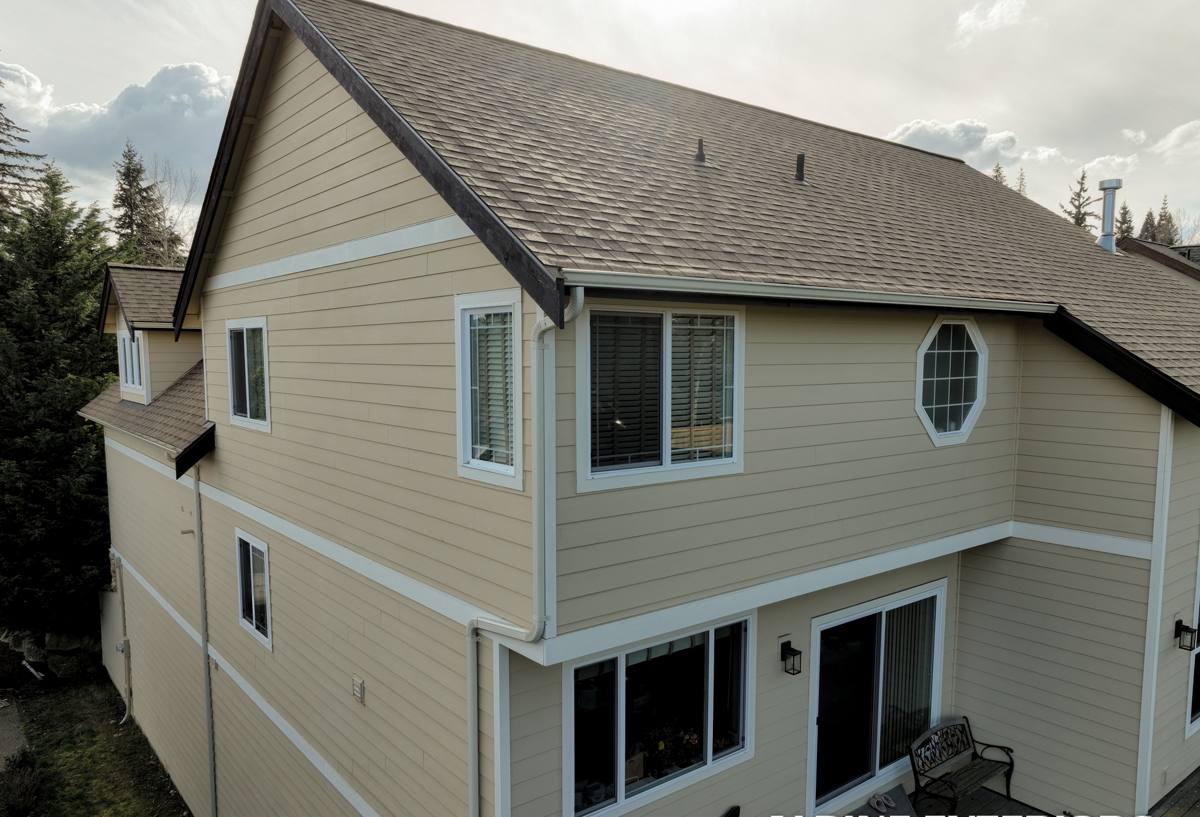
Why Board and Batten Fits (and Sometimes Doesn't Fit) Rural and Semi-Rural Homes
Board and batten has a strong pull for homes in and around Sumas — it reads as farmhouse, craftsman, or modern-rustic depending on trim and color, and it suits the larger lots and barn-adjacent architecture common in this part of the county. The vertical lines also do something practical: they shed water down and off the wall plane faster than some horizontal profiles when installed with correct flashing, which matters when you're getting driving rain on a regular basis.
That said, board and batten is not automatically the right call for every home. Homes with a lot of window and door penetrations, complex rooflines, or tight setbacks between structures can end up with a busy, overly segmented look in vertical siding. Part of an honest estimate is telling you when a hybrid approach — board and batten as an accent on gables or a porch, horizontal lap siding on the main body — will actually look and perform better than going all-vertical just because it's trending.
What Makes This Climate Hard on Vertical Siding Specifically
- Salt air corrodes unprotected or poor-quality fasteners over time, which is a bigger risk on board and batten because of the higher fastener count per square foot at the battens
- Driving rain pushed sideways by wind finds gaps at butt joints and board ends faster on vertical profiles than horizontal ones if flashing is skipped
- Extended damp, low-light stretches during moss season keep any organic growth (moss, algae, lichen) active for more months out of the year than drier climates see
- Freeze-thaw cycles, even mild ones typical here, work at any hairline gap in caulking or flashing until it becomes a real leak path
Why We Only Install James Hardie for This Application
We install James Hardie fiber cement exclusively — not vinyl, not LP SmartSide, not primed spruce or cedar board and batten, and not other fiber cement brands. For a vertical siding application specifically, that standard matters even more than usual, because board and batten puts more seams, more fastener points, and more exposed board ends into the wall system than a lap profile does. Every one of those details is a place water can get in if the material or the install is off.
Wood board and batten — cedar or primed spruce — looks great on day one but demands a maintenance schedule most homeowners underestimate: re-staining or re-painting on a multi-year cycle, checking for rot at board ends and the ground line, and constant vigilance against moisture intrusion in a climate that doesn't give the wood much time to dry between rain events. It can be done right, but it's a real ongoing commitment, not a set-it-and-forget-it siding choice.
Vinyl board and batten is low-maintenance in the sense that it doesn't need painting, but it's a thin, flexible material that telegraphs every irregularity in the wall behind it and can warp or crack in temperature swings. It also isn't fire-rated the way fiber cement is, which matters to some homeowners in this region given wildfire smoke and ember exposure concerns in recent Pacific Northwest summers.
James Hardie's fiber cement is engineered specifically to resist moisture, doesn't support the kind of organic growth that plagues wood in wet climates, and comes prefinished with the ColorPlus factory finish — a baked-on finish that holds color and resists the fading and chalking you get from field-painted materials exposed to UV and salt air. It's also non-combustible, which is a real, material difference from wood or vinyl in a wildfire-smoke-prone region.
James Hardie Product Lines Used for Board and Batten Applications
| Product | What It's For | Why It Matters Near Blaine |
|---|---|---|
| HardiePanel vertical siding | The panel base for a board and batten look, installed with vertical battens over the seams | Engineered HZ10 formulation built for the Pacific Northwest's wet, marine-influenced climate zone |
| Batten strips (HardieTrim) | The vertical strips that create the classic board-and-batten reveal and cover panel seams | Fiber cement battens won't cup, split, or rot like wood battens exposed to constant damp |
| ColorPlus factory finish | Baked-on prefinished color across panels and trim | Resists salt-air fading and holds a consistent color without repainting |
| HardieWrap weather barrier (as part of the assembly) | Water-resistive barrier behind the panels | Second line of defense in a region that sees sustained, driving rain events |
What a Correct Board and Batten Install Actually Involves
The finished look of board and batten is simple — clean vertical lines and consistent reveals — but what's happening behind those boards is where the job is won or lost. This is the part a homeowner usually can't see once the siding is up, which is exactly why it has to be done right the first time.
Substrate and Moisture Barrier
Before any panel goes up, the wall sheathing gets inspected for existing damage — a real concern on older Whatcom County homes that may have years of undetected moisture behind old siding. A code-compliant weather-resistive barrier goes over the sheathing, lapped correctly so water is always directed outward and down, never trapped behind the panel.
Flashing at Every Penetration
Windows, doors, hose bibs, light fixtures, and any other wall penetration get properly flashed before the siding closes around them. On a board and batten wall, this is non-negotiable — those penetrations are exactly where wind-driven rain concentrates, and a missed flashing detail here is the single most common cause of hidden rot behind vertical siding.
Panel and Batten Fastening
Fasteners are placed per James Hardie's engineering specs for this climate zone and corrosion-resistance class — an important detail given the salt air, since undersized or wrong-grade fasteners will corrode and stain the siding, or worse, lose their grip over time. Batten spacing and fastening follow manufacturer requirements so the reveal stays straight and the batten doesn't trap water against the panel seam.
Clearances and Ground Line Detail
Board and batten siding needs proper clearance from grade, decks, patios, and roof lines — splash-back and standing moisture at the base of a wall is one of the fastest ways to compromise even a good material. We set and check these clearances as part of the install, not as an afterthought.
Our Process for a Sumas-Area Board and Batten Project
- On-site walkthrough — we look at your home's current siding condition, wall assembly, existing moisture issues, and whether full board and batten or a hybrid approach fits the architecture
- Written estimate — clear scope, product selection (panel profile, batten spacing, color), and a realistic timeline
- Prep and tear-off — removal of old siding, sheathing inspection, and repair of any damage found before it gets covered up again
- Weather barrier and flashing installation — the unglamorous part that determines whether the siding lasts
- Panel and batten install — set to James Hardie's fastening and spacing specifications for this climate zone
- Final walkthrough — we go over the finished work with you before calling the job done
Why Hiring a Crew That Already Works This Area Matters
Whatcom County code requirements, typical wall assemblies in older Blaine-area homes, and the specific way weather moves through this corridor between the Strait and the foothills are things you learn by working here repeatedly — not from a general contractor's manual. A crew that already services the Sumas side of Blaine knows what to check for on a home of a given age and construction type in this area, has already worked out logistics for material delivery and scheduling around this region's weather windows, and isn't learning the local moisture patterns on your project.
That local familiarity also shows up in the details homeowners actually notice later: consistent color matching in the right light for this region's gray-sky days, a battens layout that accounts for how the specific home catches wind-driven rain, and a crew that's easy to reach for a warranty question or a follow-up because they're not driving in from three counties away.
Maintenance: What Owning This Siding Actually Looks Like
One of the real advantages of James Hardie board and batten over wood alternatives is how little ongoing maintenance it demands — but "little" isn't "none," especially in a moss-prone climate.
- Periodic rinsing to keep moss, algae, and salt residue from building up, especially on north-facing walls that stay shaded and damp longest
- Visual check of caulking at trim and penetration joints every couple of years — caulking is a maintenance item even on siding that itself doesn't need it
- Keeping gutters and downspouts clear so water isn't sheeting down the wall face during heavy rain events
- Trimming back vegetation and maintaining clearance at grade so the base of the wall can dry out between storms
Compare that to a wood board and batten maintenance cycle, which typically includes re-staining or re-painting, and checking for soft spots or rot at board ends on a regular basis — a materially bigger commitment over the life of the siding.
Cost Factors for a Sumas-Area Board and Batten Project
| Factor | Why It Affects Cost |
|---|---|
| Existing wall condition | Sheathing repair or rot remediation found during tear-off adds scope |
| Wall complexity | More window/door penetrations, gables, and corners mean more flashing and cutting labor |
| Full board and batten vs. hybrid accent | Accent applications (gables, porch, entry) cost less than full-elevation coverage |
| Color and trim selection | Custom ColorPlus colors and trim packages vary in material cost |
| Site access and staging | Rural or larger-lot properties around Sumas can affect material staging and logistics |
We don't publish blanket per-square-foot pricing because these variables genuinely change the number — but we'll give you a clear, itemized written estimate after seeing the home, with no pressure to sign on the spot.
Get a Local Estimate
If you're weighing board and batten siding for a home near Sumas or elsewhere in the Blaine area, we're happy to come take a look, walk you through whether it's the right fit for your home's architecture, and give you a straightforward written estimate — no pressure, no gimmicks. The form below gets you started.