 Blaine Siding
 Why Roofs Age Differently Out Here
Nooksack sits close enough to Semiahmoo Bay and the Strait of Georgia that salt-laden air is part of daily weather, not an occasional event. Add Whatcom County's long wet season, wind-driven rain that hits roof planes sideways instead of straight down, and months of shade and moisture that keep moss and moss spores active nearly year-round, and you get a roof that ages on a different timeline than one fifty miles inland. Two houses built the same year, same materials, one in a drier part of the state and one here, will not need the same repair schedule.
That's the frame we bring to every Nooksack roof repair call: this isn't a generic roof, it's a coastal Whatcom County roof, and the failure patterns we see reflect that.
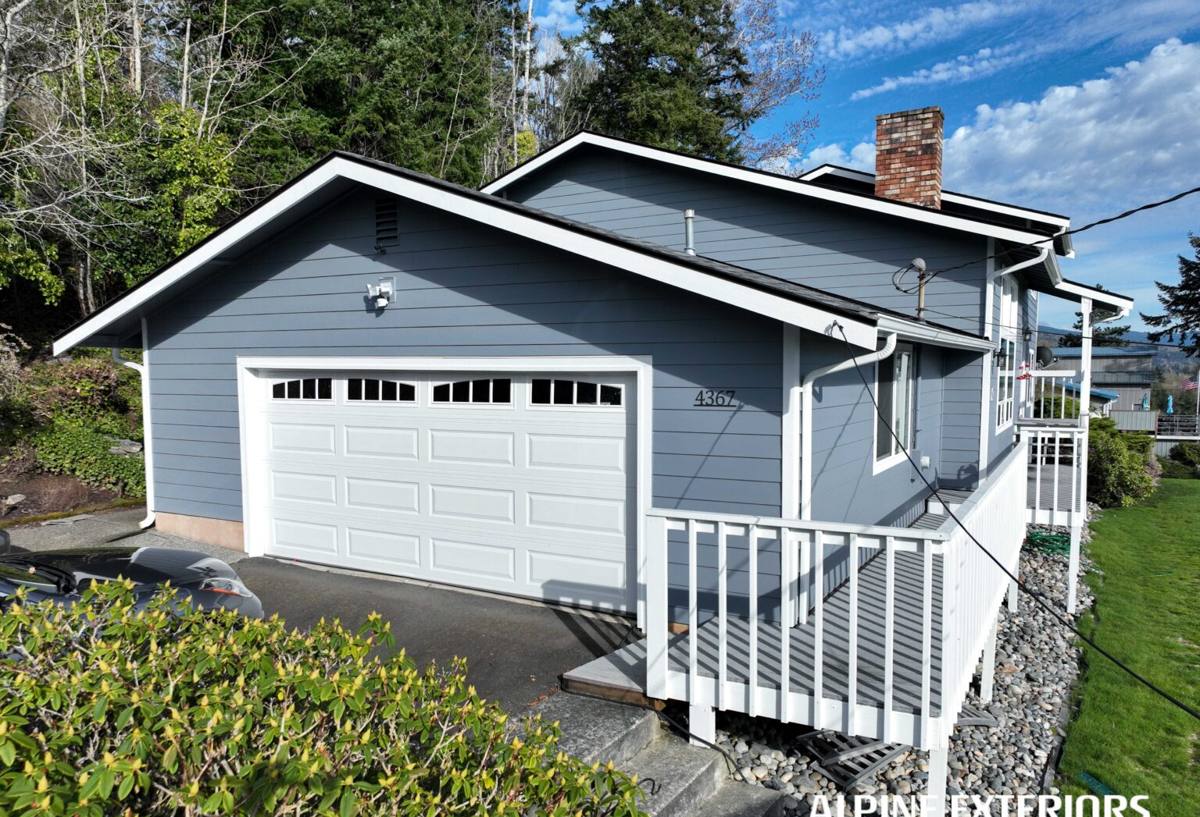
How Salt Air, Rain, and Moss Actually Damage a Roof
Salt Air
Airborne salt doesn't rot roofing material the way water does, but it accelerates corrosion on every metal component on the roof — nail heads, flashing, drip edge, valley metal, vent stacks, and screws. Once a fastener or flashing seam starts to corrode, it stops sealing the way it should, and that's where water finds its way in. On an older roof, corroded fasteners are often the actual root cause behind a leak that looks like a shingle problem.
Driving Rain
Rain that comes in at an angle behaves differently than rain falling straight down. It gets pushed up under shingle tabs, into open flashing laps, and along ridge and hip lines that would shed a vertical rain just fine. Roofs here need laps, flashing overlaps, and underlayment details built for wind-driven water, not just gravity.
Moss Season
Whatcom County's moss season runs long — shaded, north-facing slopes and anything under tree cover can stay damp for weeks at a stretch. Moss holds moisture directly against the roofing surface, works its way under shingle edges as it grows, and lifts tabs enough to let wind-driven rain underneath. Left alone, a moss mat can shorten the useful life of an otherwise sound roof by years.
Signs a Nooksack Roof Needs Repair — Not Full Replacement
Not every leak or trouble spot means the whole roof is done. A lot of what we get called out for in this area is a legitimate, targeted repair on a roof that has plenty of life left, once the specific failure point is fixed correctly.
- A stain on an interior ceiling that shows up only during heavy wind-driven rain, not steady rain
- Visible moss buildup concentrated on one slope, especially a shaded north or east-facing plane
- Granule loss or curling limited to one section, rather than uniformly across the whole roof
- A single flashing point — chimney, skylight, plumbing vent, sidewall — that's the obvious source of a leak
- Missing or lifted shingles after a wind event, with the surrounding roofing still intact
- Rusted or failing valley metal on an otherwise sound roof
If several of these show up at once across multiple slopes, or the roofing itself is brittle and failing broadly, that's usually a replacement conversation instead. Part of an honest repair estimate is telling you which situation you're actually in.
What a Correct Repair Actually Involves
A roof repair done right isn't just swapping the damaged shingle or piece of flashing you can see. It's making sure the repair ties back into the roof's water-shedding system correctly, so it performs as well as the surrounding roof for the years it has left.
Diagnosing the Real Cause
Before any material comes off, we trace the leak or damage to its actual source — which, given how driving rain travels along a roof deck, is often several feet from where the stain shows up inside. Cutting into a roof without confirming the source first risks a repair that looks right but doesn't stop the actual problem.
Matching Materials and Technique
Replacement shingles, flashing, and underlayment need to match the existing roof's type, weight, and installation pattern closely enough that the repaired section performs the same as the rest of the roof — not just visually, but functionally, in wind and heavy rain.
Flashing First
Because corrosion and flashing failure are such a common root cause here, we treat flashing as its own line item on almost every repair — chimney counterflashing, step flashing along sidewalls, valley metal, and vent boots all get inspected and, where needed, replaced with new material rather than resealed over old corrosion.
Moss Removal Done Without Damage
Moss has to come off carefully — pressure-washing or scraping too aggressively strips granules and shortens shingle life faster than the moss itself would have. We remove it with methods that protect the roofing surface, then treat the area to slow regrowth.
The Trouble Spots We See Most Often in This Area
| Location | Typical Problem | Why It Happens Here |
|---|---|---|
| Valleys | Corroded or undersized valley metal, granule wash-out | Concentrated water flow plus salt-accelerated corrosion |
| Chimney and skylight flashing | Failed seals, rusted counterflashing | Metal-to-roof transitions are the first place salt air attacks |
| North/shaded slopes | Heavy moss growth, lifted shingle tabs | Extended damp periods during Whatcom County's wet season |
| Eaves and rake edges | Wind-lifted shingles, exposed underlayment | Direct exposure to driving, wind-pushed rain |
| Fasteners and vent boots | Corrosion, cracked rubber boots | Salt air exposure combined with UV and age |
How Our Repair Process Works
1. On-Site Inspection
We get on the roof, not just look at it from the ground, and walk the specific slopes involved. We check attic-side conditions too, when accessible, since interior moisture or staining tells us as much as the exterior does.
2. A Straightforward Explanation and Estimate
You get a plain explanation of what's actually failing, what it will take to fix it correctly, and a written estimate before any work starts. If we think the roof is closer to needing full replacement than a repair, we'll tell you that directly instead of patching something that won't hold.
3. The Repair Itself
Work is done to tie into the existing roof system properly — correct underlayment laps, correct flashing overlaps, and fastening patterns suited to wind-driven rain, not just a quick surface patch.
4. Cleanup and Final Check
We clear debris and old material from the site and gutters, then do a final check of the repaired area and the flashing points around it before calling the job done.
Repair vs. Replacement: What Actually Drives the Decision
| Factor | Favors Repair | Favors Replacement |
|---|---|---|
| Extent of damage | Isolated to one slope or flashing point | Spread across multiple slopes |
| Roofing material condition | Still flexible, granules intact elsewhere | Brittle, widespread granule loss |
| Roof age | Well within expected service life | At or past expected service life for the material |
| Underlying deck condition | Solid, no rot found | Soft spots or rot present |
| Frequency of past repairs | First or infrequent issue | Repeated repairs to different areas |
Cost is part of this conversation too, but it follows from these factors rather than driving the decision on its own — a cheap patch on a roof that's actually failing broadly ends up costing more over a few years than an honest replacement would have.
What to Ask Before Hiring Anyone to Repair Your Roof
- Will you inspect the whole roof, or just the spot I'm asking about?
- Are you licensed and insured to work in Washington, and can you show proof?
- Will flashing be inspected and replaced where needed, not just resealed?
- What's your plan for moss removal that won't strip granules or shorten the roof's life?
- Do you work in this area regularly, or is this a one-off job for you?
- What does the written estimate include, and what would trigger additional cost?
Why a Local, Nooksack-Experienced Crew Matters
A crew that regularly works roofs in and around Blaine and Whatcom County already knows what a salt-air, high-rainfall, long-moss-season environment does to a roof over time. That shows up in small but real ways — knowing which flashing points fail first in this climate, using moss removal methods that don't damage the shingles underneath, and recognizing the difference between damage that needs a targeted repair and damage that means the roof is genuinely done. It also means someone who can respond promptly when a storm creates an urgent leak, rather than a crew traveling in from well outside the area.
If you've got a leak, visible moss, storm damage, or just a roof that's due for an honest look, we're glad to come out, walk the roof, and give you a straight answer along with a free, no-pressure estimate. There's no obligation — just a clear picture of what your roof actually needs.