 Blaine Siding
 Fiber Cement Siding Built for Custer's Coastal Weather
Custer sits close enough to the water and to Whatcom County's marine weather pattern that siding here works harder than siding fifty miles inland. Homes in this area deal with salt-laden air drifting off the Strait, long stretches of driving rain that comes in sideways off the water, and a moss season that can run eight or nine months out of the year in shaded, north-facing yards. Siding that isn't built for that combination fails early — not always with a dramatic crack, but with slow, quiet damage: swelling at the bottom courses, soft trim, paint that won't hold, and moss creeping up from the foundation line. Fiber cement siding, installed correctly, is one of the few claddings that shrugs off all three of those stressors at once. This page covers what that actually means for a home in Custer specifically, not siding in general.
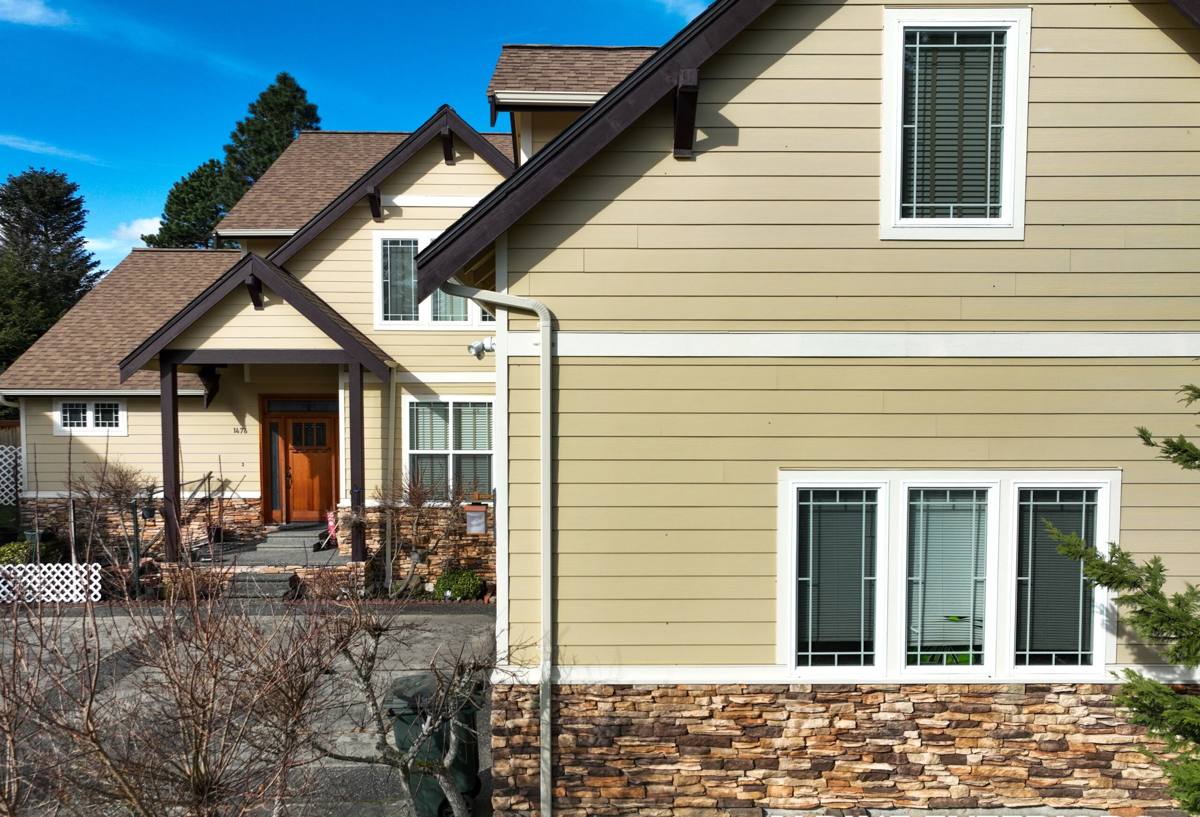
What Custer Homes Actually Need From Their Siding
Every siding material makes trade-offs. In Custer, the trade-offs that matter most are moisture tolerance, resistance to salt corrosion on fasteners and trim, and a finish that can survive repeated wet-dry cycling without cracking or peeling. A few specifics worth understanding before you replace siding here:
- Wind-driven rain intrusion: Open exposure near the water means rain doesn't just fall straight down — it gets pushed sideways into lap joints, corners, and butt seams. Weak flashing and loose caulking show up as staining and rot within a few winters.
- Salt air and metal fatigue: Fasteners, flashing, and trim hardware corrode faster this close to the coast. Material choice matters, but so does using the right corrosion-resistant fastener spec for the job.
- Moss and organic growth: Shaded north walls and anything near overhanging trees stay damp longer, and moss holds moisture against the siding surface. Siding that absorbs water gives moss something to root into; siding that doesn't, gives it nothing to hold.
- UV and temperature swings: Summer sun on south-facing walls, cold damp winters — a factory finish that's baked on rather than field-applied holds color and adhesion far longer through that cycle.
Why We Install Only James Hardie Fiber Cement
We standardized on James Hardie for every siding job we do, including here in Custer, and we don't install vinyl, LP SmartSide, or other fiber cement brands. That's not a marketing line — it's a practical decision based on what holds up in this climate over decades, not just years.
James Hardie's fiber cement is engineered specifically for moisture performance: it's dimensionally stable when wet, resistant to swelling and warping, and non-combustible. The company also builds a climate-specific product line — HZ5 for northern, wetter climates like ours — engineered around freeze-thaw and moisture cycling rather than a one-size-fits-all formula. The ColorPlus finish is baked on at the factory in multiple coats under controlled conditions, which is a meaningfully different process than field-applied paint and holds color and adhesion far longer in a wet, low-sun climate where field paint struggles to cure properly. It also carries a strong transferable warranty when installed to Hardie's published specifications — which is the other half of the equation, covered below.
We're not going to tell you every other product on the market is worthless. Vinyl is inexpensive and low-maintenance in the right setting. Engineered wood products have their place. But for a coastal Whatcom County home taking on salt air, driving rain, and moss season every year, we've made the call that fiber cement — installed correctly — is what we're willing to put our name on.
What a Correct Installation Actually Involves
Fiber cement siding is only as good as the installation underneath it. This is the part most homeowners never see, and it's where jobs succeed or fail over the following ten to fifteen years.
Weather-Resistive Barrier and Flashing
Before a single piece of siding goes up, the wall needs a properly lapped weather-resistive barrier, correctly integrated flashing at every window, door, and penetration, and rainscreen or drainage detailing where the wall assembly calls for it. In a high-wind-driven-rain area like Custer, this layer is what actually keeps water out — the siding itself is the second line of defense, not the first.
Fastening and Clearances
Hardie siding has specific fastener spacing, penetration depth, and butt-joint requirements. Corrosion-resistant fasteners matter more here than inland because of the salt air. Ground clearance and clearance from decks, patios, and roof lines also need to follow manufacturer minimums — skipping this is one of the most common causes of moisture damage in siding jobs done by crews unfamiliar with the product.
Caulking and Sealant Joints
Every seam, joint, and trim intersection needs the right sealant, applied correctly, not just a bead run along the surface. Sealant failure at joints is one of the top causes of water intrusion behind otherwise well-installed siding.
Trim and Accessory Details
Corner boards, window and door trim, and fascia details all need to be integrated with the siding plan, not treated as an afterthought. This is also where a factory-finished ColorPlus product pays off — matched trim and siding finish that was cured under the same controlled process, not field-painted trim trying to match a factory color months or years apart.
Our Process, Start to Finish
| Step | What Happens |
|---|---|
| Free estimate | On-site walkthrough of your Custer home, assessment of current siding condition, moisture points, and trim/window details |
| Scope and product selection | Confirm HZ5 product line, profile, and ColorPlus color; identify any rot, sheathing, or flashing repair needed underneath |
| Tear-off and inspection | Remove old siding, inspect sheathing and framing for hidden moisture damage before closing the wall back up |
| Weather barrier and flashing | Install or repair the weather-resistive barrier and flashing at every penetration to manufacturer spec |
| Siding installation | Install Hardie panels or lap siding to fastening, clearance, and joint specifications |
| Trim, caulking, and final details | Install matched trim, seal joints correctly, and do a final walkthrough with you |
We don't skip the tear-off inspection step to save time. On a coastal property, hidden moisture damage under old siding is common enough that finding it before it's covered back up is worth the extra day it can add to a job.
Cost Factors for Fiber Cement Siding in Custer
There's no honest flat number for siding a house — the range depends on the specifics of your home. What actually moves the price:
| Factor | Why It Matters |
|---|---|
| Home size and wall complexity | More corners, gables, and dormers mean more cutting, trim, and labor time |
| Current siding condition | Rotten sheathing or framing found during tear-off adds repair scope before new siding goes up |
| Siding profile and accessories | Lap vs. panel, trim width, and shadow-line style all affect material cost |
| Existing moisture barrier condition | A home that needs a full weather-barrier and flashing rebuild costs more than one where it's sound |
| Site access | Tight lots, second stories, and limited staging area affect labor time |
Because so much of the real cost comes from what's found once tear-off starts, we walk every home in person before giving a number — we're not going to quote a Custer job off a photo or a square footage guess.
Maintenance in a Moss-Prone, Salt-Air Climate
Fiber cement with a factory finish is genuinely low-maintenance, but "low" isn't "none," especially this close to the water. A short annual routine keeps a Hardie installation performing the way it's designed to:
- Rinse siding once or twice a year with a garden hose to clear salt residue and airborne grime — skip the pressure washer, which can drive water behind joints and trim.
- Trim back vegetation and tree cover on shaded, north-facing walls to cut down on the moisture that feeds moss growth.
- Check caulking at trim joints and penetrations annually; sealant is the first thing to wear out, well before the siding itself.
- Keep gutters and downspouts clear so overflow isn't running down the wall face during heavy rain events.
- Watch ground-level clearance — mulch, soil, or landscaping that's crept up over the years can trap moisture against the bottom courses.
Signs a Custer Home Needs New Siding Soon
A few warning signs come up often enough on coastal homes here that they're worth checking for directly: soft or spongy spots when you press on the siding near the bottom courses, paint that's peeling or bubbling in patches rather than fading evenly, visible gaps or separation at seams and corners, moss or dark staining that keeps returning even after cleaning, and any noticeable draft or musty smell near exterior walls. None of these mean you need siding replaced today, but they're the kind of thing worth having looked at before another wet season passes.
Why a Crew That Already Works Custer Matters
Whatcom County's coastal microclimate isn't something you learn from a manual — it's something you learn from doing the work here repeatedly. A crew that already installs siding in Custer knows how the wind and rain typically hit a given orientation, understands what moisture damage from this specific climate looks like when it's uncovered mid-tear-off, and isn't guessing at flashing details because the wall assembly is different from what worked on a job forty miles inland. That familiarity shows up in fewer surprises during the job and a better outcome once the siding is on.
If you're weighing siding options for a home in Custer, we're happy to walk the property, look at what's there now, and give you a straight assessment — no pressure, no inflated urgency. Request a free estimate using the form below and we'll get a time on the calendar.