 Blaine Siding
 Building New in Cherry Point? Windows Are Not a Place to Save Money
Cherry Point sits out on open water along the Strait of Georgia, north of Blaine, in an area that takes weather straight off the Salish Sea with little to break it up. If you're framing a new home or outbuilding out here, the windows you choose and how they're installed will decide whether that structure stays dry and comfortable for the next 30 years or starts showing rot, fogged glass, and drafts within the first decade. New construction gives you one real chance to get the window opening built right, from the rough opening framing through flashing, sealant, and trim. Retrofitting a bad install later means tearing into finished siding and interior walls — a much bigger job than doing it correctly the first time.
We install new-construction windows for homes and outbuildings throughout the Cherry Point area and greater Blaine, and we build every opening assuming it will face salt-laden air, sideways rain, and Whatcom County's long stretch of damp, low-sun months. That assumption changes how we flash, what materials we spec, and how we sequence the work against the rest of the building envelope.
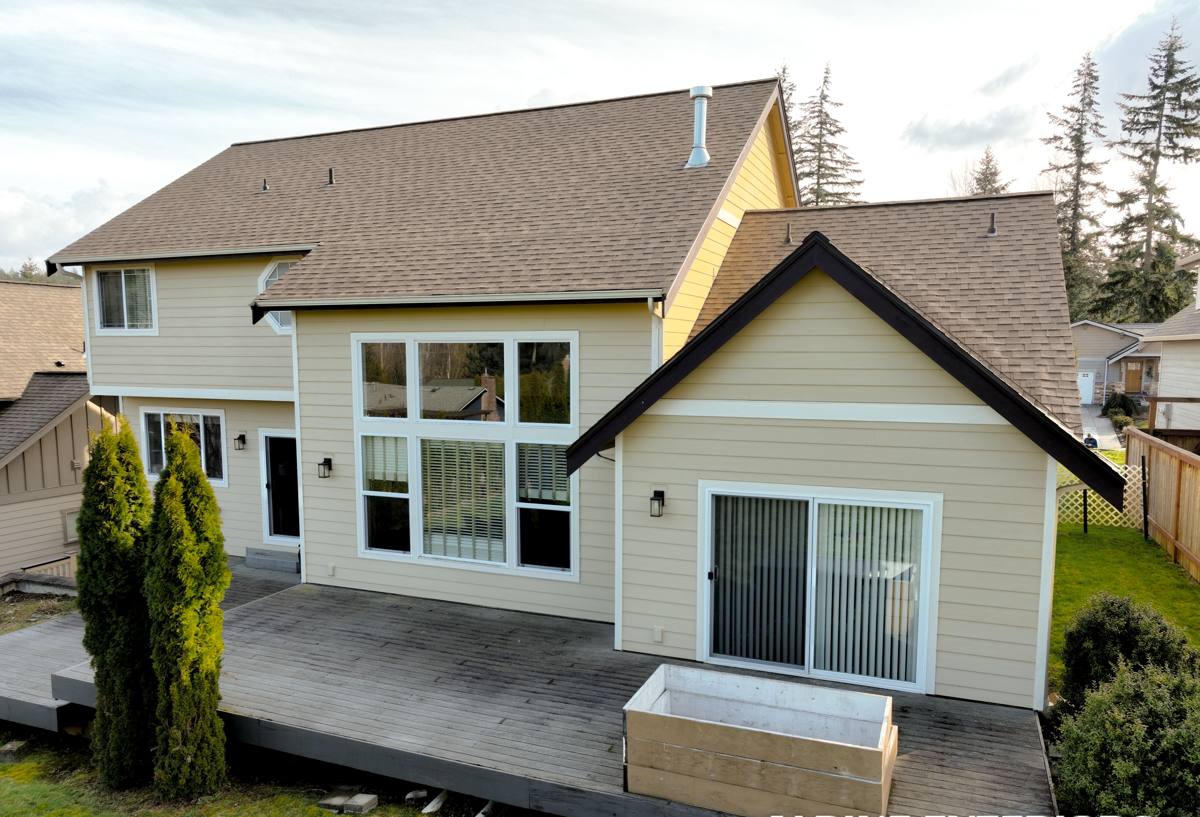
What Cherry Point's Climate Actually Does to a Window Opening
Salt Air
Proximity to open saltwater means airborne salt settles on every exterior surface, including window frames, hardware, and fasteners. Salt is corrosive to bare aluminum and to lower-grade fasteners and hinges. Over years, that corrosion can pit metal surfaces, seize hardware, and — worse — corrode fasteners hidden behind trim where you can't see the damage happening.
Driving Rain
Cherry Point's exposure means rain doesn't just fall, it gets pushed sideways into the building by wind coming off the water. A window that would perform fine in a sheltered inland lot can leak here if the flashing details aren't built for wind-driven water intrusion. This is the single biggest factor in how we detail new-construction openings in this area.
Long Moss and Damp Season
Western Whatcom County stays wet and shaded for much of the year, which is exactly the environment moss, algae, and mildew need to establish themselves. Around windows, that dampness shows up as black streaking below sills, soft trim, and — if moisture is getting behind the cladding — hidden rot in the sheathing around the rough opening. New construction lets us build in drainage and drying paths before any of that has a chance to start.
What a Correct New-Construction Window Install Involves
New-construction windows are designed to be installed with a nailing fin that gets integrated directly into the wall's weather-resistive barrier (WRB) system, rather than installed into an existing finished wall like a retrofit window. Done right, the install follows a specific order so water is always directed outward and downward, never trapped against wood framing.
- Rough opening is checked for square, level, and correct size per the window manufacturer's specifications
- Sill pan flashing is installed first, sloped to drain any water that reaches the sill back to the exterior
- Window is set, shimmed level and plumb, and fastened per the manufacturer's schedule
- Jamb and head flashing are integrated in the correct shingle-lap order — sides before top — so water sheds over each layer
- Flashing tape and the WRB are lapped and sealed so the whole assembly drains to the sill pan and out, never into the wall cavity
- Interior and exterior sealant is applied at the right joints only — sealing the wrong joint can trap water instead of keeping it out
- Exterior trim and cladding are installed to maintain drainage gaps and keep the window's weep paths clear
Skipping or reversing any one of these steps is how "invisible" leaks start — water gets behind the cladding and travels down inside the wall for months or years before it ever shows up as a stain or soft spot on the inside.
Sealant Is Not a Substitute for Flashing
A common shortcut on new builds is leaning on caulk and sealant to do the job that proper flashing should be doing. Sealant fails — through UV exposure, movement, and age — and when it's the only thing keeping water out, that failure becomes a leak. We treat sealant as a secondary line of defense, not the primary one, especially on a wind-exposed site like Cherry Point.
Choosing the Right Window for This Site
Frame material matters more here than in a sheltered inland location because of the combination of salt exposure and constant moisture. There's no single "best" material for every budget, but here's how the common options actually perform in this specific environment.
| Frame Material | Salt Air Durability | Maintenance | Thermal Performance | Typical Cost Tier |
|---|---|---|---|---|
| Vinyl | Good — won't corrode | Low | Good, varies by chamber design | Lower |
| Fiberglass | Very good — dimensionally stable, corrosion-proof | Low | Very good | Mid to Upper |
| Wood-clad (with aluminum or fiberglass exterior) | Good if cladding is intact; wood core needs the cladding to stay sealed | Moderate | Very good | Upper |
| Bare aluminum | Poor without a marine-grade finish — prone to pitting and corrosion near open water | Higher | Weaker unless thermally broken | Varies |
For most new builds at Cherry Point, we steer homeowners toward vinyl or fiberglass frames specifically because neither one corrodes, and both hold up to salt air with minimal upkeep. Wood-clad windows can still be a good choice for a specific look, as long as the homeowner understands the cladding has to stay fully sealed at every joint to protect the wood core underneath — a maintenance commitment that's worth being honest about upfront rather than glossing over.
Glass Package and Energy Code
Washington's state energy code sets minimum performance requirements for new-construction windows, and Whatcom County permitting will check for compliance. Beyond the code minimum, the practical target for this climate is a low U-factor for heat retention through our long heating season, paired with a moderate solar heat gain coefficient — enough to bring in welcome daylight without needing high solar gain that this climate rarely benefits from. We'll walk through the glass package options that meet code and make sense for your specific elevations and sun exposure, rather than defaulting to one spec across every window on the house.
Our Process for New-Construction Projects
We coordinate directly with your builder or framer so window rough openings are sized correctly before we ever show up, and we sequence our work with the WRB installation so flashing integration happens in the right order rather than as an afterthought.
- Review plans and confirm window sizes, swing/operation types, and rough opening dimensions before ordering
- Order windows in the frame material and glass package that fits the site's exposure and your budget
- Coordinate install timing with the builder's WRB and siding schedule
- Install sill pan flashing, set windows, and integrate flashing in proper shingle-lap order
- Apply sealant only at manufacturer-specified joints
- Walk the finished openings with you before trim and cladding close them up, so nothing is hidden before you've seen it
Quality Checklist We Hold Every Install To
- Rough opening squared and correctly sized before the window is set
- Sill pan flashing installed and sloped to drain outward
- Flashing lapped in correct order — sill, jambs, then head — so every layer sheds water over the one below it
- Window shimmed plumb, level, and square, not just fastened into place
- Weep holes and drainage paths left clear, not blocked by trim or sealant
- Sealant applied only where the manufacturer specifies, not as a catch-all
- Manufacturer's fastening schedule followed for the specific window model and frame material
Why Local Experience on This Coastline Matters
Window flashing details that work fine in a sheltered subdivision inland can under-perform on an open, wind-exposed site like Cherry Point. A crew that's only worked sheltered lots may not think to upsize flashing laps, choose corrosion-resistant fasteners, or plan drainage for genuinely wind-driven rain rather than straight-down rain. We work this stretch of coastline regularly, so these aren't special add-ons we upsell — they're just how we build every opening out here, because we've seen what happens when they're skipped.
We also know the practical side of building in this area: Whatcom County's permitting and inspection expectations for new construction, and how to sequence window installation so it doesn't hold up your framer, sider, or your overall build schedule.
What This Means for Your Timeline and Budget
Window cost on a new build depends on quantity, size, operation type (fixed, casement, slider, etc.), frame material, and glass package — there's no honest flat number without seeing your plans. What we can tell you upfront is that spending a bit more on frame material and flashing detail at the time of construction is far cheaper than repairing rot or replacing failed windows five or ten years in. On a coastal site like this, the install quality matters as much as the window brand you choose.
If you're planning a new build or an outbuilding at Cherry Point, we're happy to look at your plans and give you a straightforward, no-pressure estimate for the window package and installation — just fill out the form below.